About face
equality

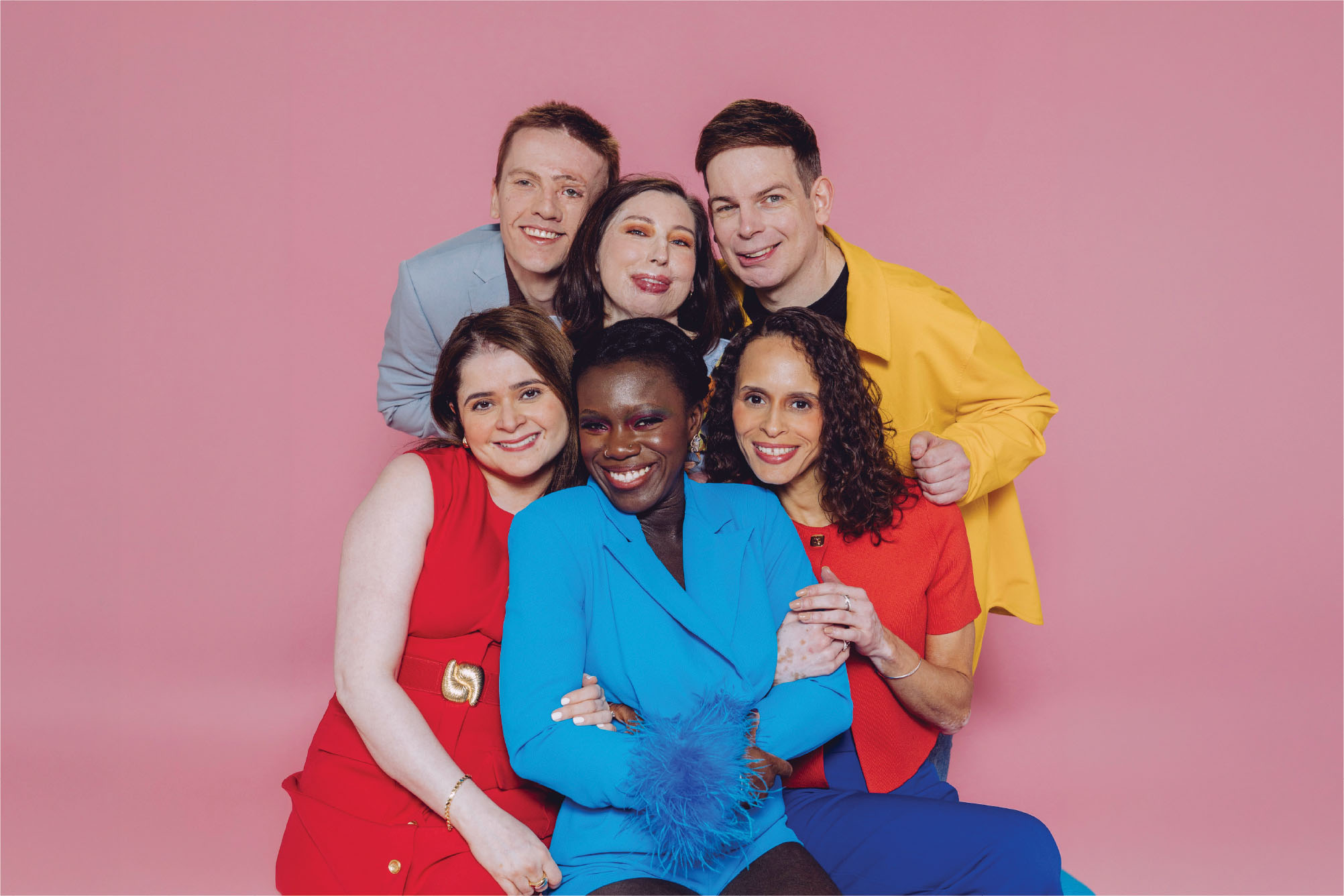
Face equality is about being treated fairly and equally irrespective of facial appearance. It is about creating a society in which everyone is valued for the unique contribution that they can make to society.

The campaign aims to:

  • Raise awareness of our unconscious beliefs about disfigurement that can result in prejudice and discrimination
  • Encourage people, organisations and the government to tackle such beliefs and attitudes and make a commitment to face equality
  • Help everyone learn new ways of thinking and behaving towards people with disfigurements.

We are calling on:

  • Individuals to spread the word, stand out and support face equality
  • Health and social care professionals to develop services that treat patients with disfigurement as having psychological and social as well as medical needs
  • The education system to ensure that all staff are adequately trained to develop a culture and practice of inclusion for people with disfigurements
  • Employers to create a culture and practice of face equality for people with disfigurements as employees and customers
  • The media, advertisers and the film industry to adopt factual and unbiased portrayals of disfigurement – actively avoiding language and imagery that creates prejudice.
  • Politicians and policy makers to ensure that facial prejudice and discrimination are effectively outlawed by improving anti-discrimination law and promoting best practice.


Why face equality matters

In January 2008 Changing Faces conducted independent research to investigate people’s attitudes toward disfigurement. When directly questioned the vast majority said that they did not discriminate against people based on their facial appearance. However an Implicit Attitude Test revealed that 9 out of 10 people held negative attitudes towards people who have disfigurements.

Many of these attitudes are unintentional and unwitting but still result in prejudice and discrimination against people with disfigurements in the way that:

  • They are treated at work
  • They are treated at school
  • They are portrayed in the media, film and advertising
  • People react to them when they are out in public.

This has huge practical implications for those who live with disfigurements, who might currently assume that they won’t get front line jobs, go to university, or even be able to walk down the street without being stared at.

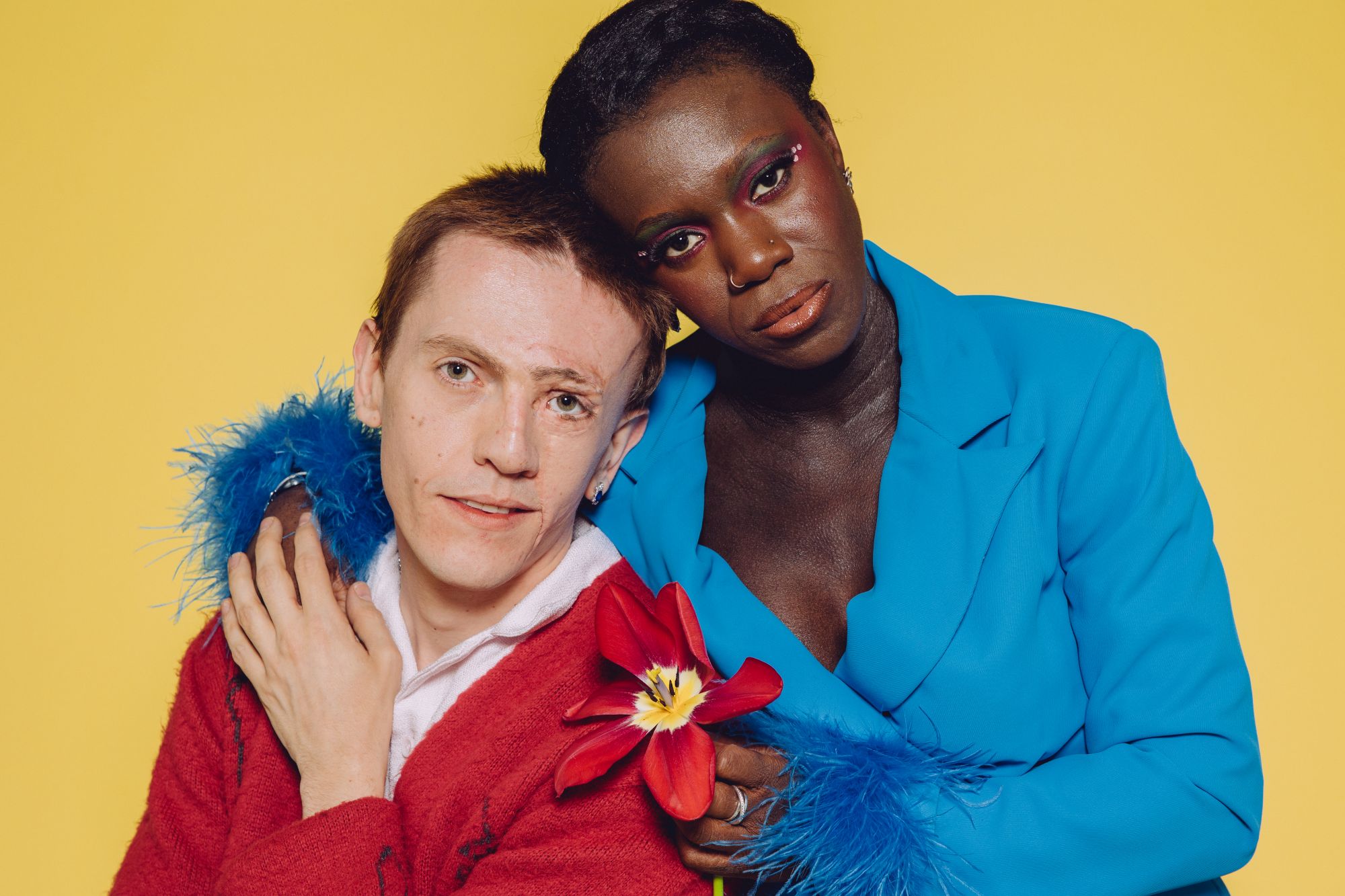
You can start showing your support by lending your face for face equality.

Your Comments

If you are struggling to cope and you would like to speak to someone in confidence, please call 0845 4500 275 or email info@changingfaces.org.uk. Please note, we are not able to contact anyone after they have left a message on this board.

Changing Faces, UK

For reasons of safety and confidentiality, it is best not to leave personal contact details on this message board. If you are struggling to cope and you would like to speak to someone in confidence, please call 0845 4500 275 or email info@changingfaces.org.uk.


natalie, 26, uk

Comment I have a slight facial disfigurement an it affects my life 90 per cent I feel like I will never meet a partner or have normal life I often wish I wasn't here as I feel this day an age everything is based on beuty I would like to hear of other people suffering like my self


Sharon Burt, 37, Liverpool, UK

Reading the comments on here makes me realise the wide range of emotions experienced b y people with facial disfigurements. I too have a facial disfigurement. I was born with a condition called Goldenhar Syndrome; I was born without a right eye and socket. My right nostril was split down the middle and I had facial skin tags. That was 37 years ago. After 20 odd operations, my face isn’t perfect but it’s the best I am going to get. Yes I still have bad days thinking why me, why do I have to be the one stared at in the street. I also have good days when I think how lucky I am compared to others. I can’t imagine what it must be like to become suddenly facially disfigured. I have lived all my life like this so I don’t know what it’s like to look like other people. 2 years ago I qualified as a life coach so I can help others with similar issues to me. I can empathise with you; I know how you are felling and what you are going through. If you are interested in participating in some life changing coaching, please feel free to email me at smbcoaching@hotmail.co.uk. You can also find out more information about me at my website www.smbcoaching.co.uk. I am more than happy to give a generous discount to anyone contacting me after seeing this on Changing Faces website. Feel free to contact me for a general chat; you are under no obligation to sign up for coaching.


joe, 47, madrid

It would be nice to share experiences with other people. I have never discussed my facial deformities with people like me. It would nice to get in touch my email is joe41spain@yahoo.co.uk


Joe, 47, Madrid

Comment I was born with a disfigured face. I've had 16 operations only 5 of them have been for cosmetic sugery. I grew up with the bone of my nose squashed to one side. I have a rare pallet and My left eyes is still deformed. I oftened wondered as a child, why me? why was I born with this face. I suffered the usual nmae calling and staring. But all in all I had a normal and happy childhood. My early years of adulthood were not so good. Being rejectd by the opposite sex whilst all my brother and sisters had partners. I began to feel more alienated. I left the country 18 years ago and within weeks I met my future wife. Although we returned to England for a while, we are now settled back in Madrid. What I would like to know if there are any support networks groups that meet and if anybody knows of one in Madrid


Karen, 40, Peterborough

I was born with Facial Palsy and am paralysed on the left side of my face. You can read my story at www.facial-palsy.com. There are a couple of groups on Facebook where people with facial palsy get together and discuss stuff. If anyone is interested please contact me via my website.


Liz, 22, Midlands

I was born with a facial disfigurement, I was missing muscle and a nerve from my face which meant that the right side of my face was completely paralysed. I underwent two purely cosmetic operations between the ages of 5 - 7, where they took a nerve from my leg and a muscle from under my arm and put them into my face. I missed school, have scars down both sides of my head and neck, under my arm and down my right leg and if anything it made the problem worse as now I still have very little movement but my face is a lot less symmetrical. My parents meant well but in their effort to make me normal rather than accept what I looked like they caused more potential harm. Luckily I like looking like a freak. I dont have to do very much to earn support, respect and appreciation from other people, I get to make less of an effort and acheive more than most people. People ignorantly mistake my own weary acceptance of a situation I have no control over as confidence and strangely enough thats worked fantastically in my favour. Societies prejudices can be manipulated and honestly, I might not be winning any beauty contests but you'll never forget this smile.


Changing Faces, Lo

If you are struggling to cope and you would like to speak to someone who can help in confidence, please call Changing Faces on 0845 4500 275 or email info@changingfaces.org.uk. Please note, we are not able to contact anyone after they have left a message on this board.


Paul, 30, Midlands

Burned my face accidently. Finding it hard to deal with. Keep going over it in my mind how stupid I was and how so easily preventable it was. Regularly wish i wasnt alive. I am single with no family and now know that will never change since i have no confidence left. I don't like going out. Somedays i sit in front of the mirror for hours other times i dont want to look. Its hard.


Miranda, 26, Pennsylvania, United States

On December 7th, 2002 I was in a almost fatal car accident that resulted in a huge scar on my left side of my face that goes from my top inner eyelid, down the outer side of my cheek, across my jawbone to the corner of my mouth, inside and under my top lip and into my the left side of my nose. I personally have coped quite well to the scar, believing that everything happens for a reason and that I am glad I still have my life. At first the staring was pretty bad, but I think it bothered whoever was with me at the time then me. I think the scariest thing for me is the children, as I have had many stare, point and say some pretty hurtful things. Although most adults are really no better and just stare instead of ask. I usually prefer people ask me, instead of assuming things. It doesnt bother me at all to talk about. I fortunetley went on to meet a man who is now my husband, and have 2 beautiful little children. I still have all the same friends, and my life post accident has really not changed much because of the scar. I think people pity a lot, which can be bothersome since I am pretty much okay with the way I look. At the time of the accident I was a teenage in her prime, and to many teenage girls, looks are everything, which I now see as a sad way to live. I hope your campaign better educates people on facial disfigurement and also helps people like me learn to cope better.


Julie, 50, Ipswich

Not many years ago BT ran a mandatory training course for its engineers which stressed appearance. People make up their minds about a person within a minute or so of meeting them, and 90% of their impression is based upon the face, we were told. If that is at all true, then those of us who are disfigured or deformed start from a weak place. I count myself one of the fortunate ones, a success story for Great Ormond Street, Guys Hospital and all the other places I received treatment in my childhood and twenties. After 7 operations, I have a face which isn't too hard to look at. But though you can't see them, the scars are great, both physically and otherwise. Being ostracised by your classmates from the age of 5, sneered at because your teeth are black, stared at even now by children, having your brother deny knowing you in front of his friends... those experiences mark you for life. We have to talk about these things, and try to make the world a better place for those who have to take a big breath, smile and take their courage in both hands just to enter a room full of new people.


Lisa, 18, scotland

I have a facial disfigerment. i was severly burned as a baby my face was badly burned and i also lost all my fingers on both hands most of my hair, my nose, ears, and a lot more. thankfullu due to surgery my apperiance is a small bit better. i have had a lot of operations e.g my nose rebult, toe transfers, skin graphs. this has made me a stronger person, but the way i get treated by the public is terrible. i left school at 15 as my teachers werent great with dealing with disfigerment. i left collage as i got bullied. there has not been 1 time i can go shopping with friends or family and not get looked at or asked the most annoying question " What is wrong with you?" nothing is wrong with me. i just had a tragic accident that has made me look diffrent on the outside, but the inside is just the same. i support this campainge very much. best wishes to everyone :)


Lisa, 18, scotland

I have a facial disfigerment. i was severly burned as a baby my face was badly burned and i also lost all my fingers on both hands most of my hair, my nose, ears, and a lot more. thankfullu due to surgery my apperiance is a small bit better. i have had a lot of operations e.g my nose rebult, toe transfers, skin graphs. this has made me a stronger person, but the way i get treated by the public is terrible. i left school at 15 as my teachers werent great with dealing with disfigerment. i left collage as i got bullied. there has not been 1 time i can go shopping with friends or family and not get looked at or asked the most annoying question " What is wrong with you?" nothing is wrong with me. i just had a tragic accident that has made me look diffrent on the outside, but the inside is just the same. i support this campainge very much. best wishes to everyone :)


Laura, 21, Edinburgh

It will be 21 years since i got disfigured this friday. This video is amazingly well done as it shows exactly what i have to put up with at times. Granted not everyone stares. This campaign highlights that people do associate disfigurement with negativity. Kids have been pulled away from me when im shopping as parents seem to think im infectious. I get annoyed when people stare when im in a group of friends and my friends are trying to work out what the person is staring at. Its embarassing for me as in instantly know. The other thing i hate is being treated like a small child by shop/cafe assistants. I have several qualifications and am just finishing a degree so please dont ask me if i need help holding clothes! Please excuse the rant but i really like the true ness of the campaign


Coral, 52, Hampshire

Comment I have large left side facial port wine stain. Incidently I HATE that term! Good luck with your campaign. I wish i had had support as a child i grew up in a hostile world that could not cope with how i looked and seemed to hate me for it. Well i started to hate the world right back and developed a suitable aggresive 'in your face' character to scare them all away. It worked a treat. I have about 3 genuine friends that seem to have found the real me and understand that I retreat into depression like eeyore from Winnie the pooh. My children suffered at school because of the way i look, other children said their Mum looked like the terminator with his face blown away. My children say they never knew there was anything unusual with my face until other children pointed it out, they love my face because it is their mums face. I started to do a lot of voluntary work at the school after that..I do not wear make up to cover my mark and i now work in a public library. The only way people stop commenting is when it becomes nothing unusual, they see it every day.But a disfigured face will always be a blank screen for others to project all their negative side on to.


Malcolm, 53, London

Comment Experience - large facial nevus. I really do hope that this campaign has some success but I fear it is asking a lot of people to change what for most is 'natural' behaviour. We are highly visual animals and pattern matchers supreme; we are naturally attracted to that which is different, it IS hard not to stare. This site and the campaign prompted a couple of blog posts (here if anyone is interested: http://malcolmgoodson.blogspot.com/2009/01/death-penguins-and-make-up.html and http://malcolmgoodson.blogspot.com/2009/01/questionable-content-m-eiffels-metal.html - towards the end) which were actually quite difficult to write, does one raise the issue? I guess you have to really, being stared at is not really very nice however much you understand why. And other people's embarrassment? An extract from a blog comment (by me): I remember once sitting on the tube reading my book when a nine or ten year old sat opposite me. He was obviously intrigued and so, very loudly :), asked his father what was wrong with my face. Instant embarrassment on the father's part and earnest demands for 'silence' from the child and an apology to me. I closed my book, leaned across to the child and in simple terms I hoped he would understand (he did) explained why I looked the way I did, ie what had 'gone a little wrong' while I was a fetus. He was quite satisfied and his curiosity subsided. About five minutes later, I noticed his father had the self same mark, although only about the size of an old English penny, low down on the side of his neck. Strange, no?


Catherine, 43, Australia

Like Alison from Merseyside I have a cleft lip and palate and my schooldays were just as negative. I thought as an adult things would get better, and they have in many ways as I have learnt to accept and value myself much more. But now I wonder about the current fascination with so-called 'evolutionary psychology' which comes out with sensational 'research' in the media about preferences for certain types of faces due to genetic imperatives, babies being able to distinguish so called 'better looking' people, etc, etc, whereas there is no hard evidence for any of this being much more than speculation. I fear all this could grow into another way of justifying why people with facial differences have it tough in life. When really, discrimination is all about people's uninformed attitudes.


sara, 43, london

i too have a facial disfigurement surgery scars on my left hand side of my jaw, after having sevaral surgeries to remove abnormal birthmark. having lived with my disfigurement for years .It doesnt become any easier when people still stare . Sometimes i stare back but when i am feeling bad i just wish i was invisible. Having a disfigurement has definitely held me back over the years just having the confidence to pursue everyday things like socialiseing in public places makes me think twice. Just incase i am starred at


Fernando Almeida, 46, Rio de Janeiro, Brazil

As an Oral and Maxillofacial surgeon, I deal constantly with some disfigurements into my specificity relative to the maxillofacial complex, which includes the SMILE. These are classified as Dentofacial Deformities. Although I didn't see any references to this kind of condition at this website, I must say this is one of the most affecting disfigurements. I am including an example of so for your appreciation. This can be viewed at http://www.cosmeticvacations.com/cosmetic_dentistry/orthognathic_surgery.php Waiting for your comments.. Fernando Almeida


Donna, Ag, Milton Keynes

I do not have a facial disfigurement but this society glorifies everything that is superficial. Every magazine shows perfect looking celebrities with perfect looking bodies. Because of this, even those without facial disfigurements feel inadequate, so I can only imagine how terrible it must be for those with a disfigurment. In relationships, the 'not so pretty' girl normally remains single for longest and there seems to be an endlest number of women who are willing to date the good looking guy even though he treats them like less than humans. I used to fall into that trap but 4 years ago I met a very average looking man and he has turned out to be the best person in the world. Unfortunatley, some friends have disliked him because of his looks without even giving him a chance and I know that he has been refused jobs because of his looks. This experience made me pay particular attention to your excellent campaign, as society should be confronted with it's own shallowness and be made to realise that it is the heart of the person that matters and not what they look like.


Pam, 51, East Sussex

Experience I am a Gp - I was researching information about craniosynostosis which is a major disfiguring condition. I came across this website- I will be informing my patients about it, as there are many condition which I see on a daily basis where there is some degree of facial disfiguremtn- eg severe acne with scarring; cleft lip; scars from traum etc I think this is a very worthwhile endeavour and I will support it.


Lucy, 14, Alnwick

I'm not disfigured myself but came across this site whilst doing research for my 'appearences' project in art for GCSE - I'm mainly basing my work on faces and the judgement that comes with individuality. I just wanted to say that I think that this campaign is very special and is doing a very important thing in shownig equality no matter what's on the outside


carol, 45, london

My child has termed dysmorphic feature and guess what she will have to have an invasive risky surgical procedure just to fit in, it is surgery she now wants as up to now she has suffered the affects of looking different.. Already the gaps are showing in terms of normal milestones e.g. boyfriends, getting work. Being asked by headteachers if she has special needs when looking around schools (academically bright although got behind when bullied in school) its a shame that in todays enlightened world her experience has been such a struggle/experience. I know she has been discriminated against yet sometimes this is hard to prove. I definately agree that teachers need to further education on this aspect of childhood development.


Ann, 21, Poland

I'm really sorry, I clicked Submit by mistake I suppose such a campaign should be launched also in my homecountry, Poland. I really hope your campaign will succeed.


Ann, 21, Poland

I don't have any disfigurement myself, but I am considered to be "very ugly". When I walk down the street, passer-bys often comment my outside looks: "oh, what a dog!", "if I looked like this girl, I'd commit suicide" and so on. I DO have a really big, bulbous nose, but Jesus, that's not my fault! I suppose


Rachel Cleary, 35, Sheffield

I am a mother of a child with Down's syndrome, he is a happy, sociable and lovely chiild. What hurts me deeply is the attitute of individuals when we are out and about, obviously he looks different but rather than smiling at him or replying when he says hell,o more often than not people just stare at him. Currently he is unaware of how rude and ignorant people are but what worries me most is when he realises he is different to everyone else and people aren't looking at him in order to engage with him, they are just staring because the are rude and ignorant. It is about time difference was embraced.. really wouldn't our world be a very dull place if we all looked the same..


tricia, 55, lancashire

i have had vitiligo since the age of 30 and it seemed to stay in just a few places small patches, but this year 08 it just seems to be spreading quickly, and an ex did comment on how it looked and now that has made me a bit embarrased about it, will everyman think the same! as i am single now.


Alison, 50, Merseyside

I have a cleft pallete and hare lip, unfortunately this means I did not prosper academically as the teaching staff in the secondary modern I attended had very negative attitudes to disfigurement, so diid the primary school staff which reinforced other pupils superficial values. I have since financed my attendance at adult education classes. The result is I am always way behind my age peer group in terms of employment status and earnings. A degree gained in your forties is not going to reap the same rewards as one achieved in your early twenties. Disfigurement can have a permanent negative impact on your earning capacity.


Jan, 25, Miami, FL, USA

I have a large AVM (Arteriovenous malformation) on the lower left half of my face. I'm constantly wearing makeup to cover it up. I've been doing this since my teen years. I agree that our society is extremely superficial. Particularly here in Miami, where physical beauty is the most important thing on young people's minds. I often feel embarrassed about my facial condition. I've also had tons of surgery for my condition, so my face has changed a lot over the years, which makes it even more difficult. I'm really glad that there is this campaign for increasing awareness. Oftentimes, I feel like people look because they just don't know. I know that if it was the other way around, I'd probably look too, just out of curiosity. But I am just tired of feeling inadequate because of it. I know that this condition is a part of me, I'm ready to accept it for what it is, move on, and embrace life regardless! I am so much more than just my face.


Ann, 60, USA

I do not have a facial disfigurement but I have a forehead that is too large and a hairline that is too high. I know that seems trivial unless you add to it that I also had very crooked teeth and was the least attractive in a family of ten girls. My mom was quite pretty but was mentally ill and was quite critical and abusive of all her daughters. I always felt ugly and worthless even though I was otherwise quite pretty. As an adult, I got braces at 28--that helped tremendously. I also sought out counseling and learned that my mom was not well--it was not about me. Somedays I can believe that easily, others I still struggle. Over the years I also learned to look to God for myself worth. It has made a tremendous difference in my life and the increased happiness is reflected in my face so it has actually made me prettier. I have come to believe that many people struggle deeply with something--their struggles just don't always show on the outside. In response to this belief, it is one of my life's commitments to treat everyone I meet as a child of God and a human being of equal worth. I am often told that I do--I hope that it is so. However, sometimes I really need guidance from those whose differences are on the outside as to what it means to do that. I did not have the opportunity to learn this kindness at home. I'm sure many others didn't either.


Niall, 37, Dublin,Ireland

I have Vitiligo. I have patches around my eyes so far. It started off as very small patches of de-pigmented/colourless skin on my lower body then spread to my face. I'd feel ok if it stopped now but it spreads more


Alexander, 23, Toronto, Canada

I first heard of this website because of the BBC. People are discriminated in so many ways, from race, to age, to sexual orientation, or weight, or illness, and of course disfigurements are just another branch of this tree. I often feel that modern society glorifies the haughty and vain, and dismisses ideals like humility and kindness. Once you shake a person's hand, or speak to them longer than a few seconds, appearance becomes completely trivial. It is the soul that truly matters, and I hope that in my lifetime people will let go of the marketeers who tell us what is and isn't beautiful.


Sharon, 56, Canada

The face represents who we are, and life is just that little bit extra difficult when we don't like our own faces. In my own family, a somewhat angular face and mild acne have led three generations to go through life feeling ugly - my mother, myself, and my niece. I always thought my mother and my niece beautiful, but I really have to work at feeling good about my own face, because I know what the world thinks of it! Once when I was working at a laundromat, I met a man with a serious facial disfigurement, because of an accident he'd been in, and I started chatting with him as I would anyone else; his reaction told me that very few people even spoke to him. I think this is key - and the answer for Sarah; observe how you react to so-called normal people in any situation, and then consciously apply the same behaviour to people with disfigurements, until it's habit. If you normally look at people on the sidewalk for exactly three seconds, do the same for the person with a disfigurement. If you're in a place where you normally speak to people, then talk to the person with the disfigurement. That's all most people want - to be treated like ordinary people.


Sheila Squire, 33, Wales

Experience I don't have a facial disfigurement, but I am hearing impaired. I work in a 'normal' school as a teacher for 'normal' children. I too experience feelings of inadequacy and embarrassment. I find it very hard to prove my worth as a teacher to parents who feel I should not be teaching their children. We do live in a society where disabilities and facial disfigurement are dealt with badly, simply because people are too polite to deal with things, pretend they don't notice, or they are uncomfortable with difference. Be open, ask, because then we can prove that we do have qualities and are just as valuable to society.


Elizabeth, Singapore

I stumbled upon this website through a news link on BBC, and although I do not have a facial disfigurement, I am appalled by the reactions of some people who encounter people with deformed features. That is blatant discrimination. It isn't very nice to be unkind and think what that person must feel. For all you people who do not have a look that the general society approves of, always remember that there are people out there who looks past your features, and looks are transient after all. There is a God who loves you.


Sarah, 28, London

I don't have a facial disfigurement and I wouldn't like to think that I am unkind when I see someone who does. But what should I do, as an unaffected person in the street, when I see somebody with a disfigurement? If staring is bad, so too is looking away too fast. Smiling or holding a friendly gaze is not normal in London, regardless of what people look like. I can't help registering it if I see something unusual, and this will show on my face instantly - it's a natural human reaction to be drawn to something different or new to you, regardless of whether you are judging it or not. How should I deal with this so as not to give offence?


Sam, 50, Ghana

I have a facial disfigurement and is terrible what I go through. From discrimination at the work place (not getting what I deserve), people staring at you whenever you are out, others looking down upon you, etc. It is terrible. I see this even when I am in church. It is very embarrassing. Wish this campaign could be extended to this part of the world to help people with this challenge.


Teresa, 36, Llandudno

I think this organisation is doing a wonderful job of trying to raise peoples awareness of how people can have a negative attitude towards disfigurement. I was particulary touched by Clare's comments that she looks right back if she is feeling bold, but sometimes when she doesnt feel good about herself she feels embaressed. I'm sure we can all emphaphise with Clare regarding having a bad day with regards to how you feel you look. However I am sure that is made all the more harder when you feel that people are looking at you. xxx


Sandy, 58, USA

I think that getting people of all stripes to even ACKNOWLEDGE that people with facial disfigurements exist, have feelings, are 'normal,' have experienced discrimination of all kinds in the past ... WHEW! Here in the USA, one organization has selected a beauty queen as their spokesperson! I think most organizations focus on the 'medical' aspects - with a BIG emphasis on the cause (even though, with the exception of purely hereditary conditions, finding the 'cause' won't help those living with it today) "social" aspects of a disfigurement are handled via learning how to apply make-up better, learning 'social skills'. While these are nice to learn, they don't do anything about changing attitudes of unaffected people. I am very interested in reading more about your research. Unlike people with physical or sensory disabilities, "we" DO have the power of how we present ourselves. Makeup aside, it's important to learn how to fell self-assured in public ... giving eye contact especially, when appropriate, integrating in a 'typical' fashion and recognizing when it can help to say something re: disfigurement and when one has to "shine it on" because the WORST DISABILITY is reserved for those deemed "MORALLY handicapped".


Harold, 37, Georgia USA

I do not have a facial disfigurement but I want to express my support for this organization's goal of changing society's views on the subject. Our society is extremely superficial and we never take the time to know someone as a person. We are too quick to judge someone based on physical characteristics that the person has no control over. What you look like is a product of genetics and chance. The person that you are, your character, is a product of what you are striving to be. You can make yourself a positive member of society but you cannot make yourself fit a certain physical standard. We should judge people on the things about themselves that they can directly affect. I will work on my own attitudes and prejudices so that I will not make someone feel awkward or ashamed because they are different. I will try to look at the inner person instead of the outer person. I will try to spread the message of acceptance and equality.


Clare, 43, Essex

I too have a facial disfigurement, a large port wine stain on the right side of my face. I can really empathise with you. I too can't stand being stared at and if I am feeling bold enough stare straight back. However there are the times when I don't feel good about myself and all I want to do is sink into the ground and disappear. I feel embarrassed for the person I am with incase they have noticed I am being stared at... .. How silly is that?


Your Views

Call for comments