Sometimes I can feel it when I look to my side. The plastic prosthetic shell in my eye pushes slightly against the lid, and I’m offered a gentle reminder of the accident I suffered as a child. I was eight when it happened so there’s a lot I don’t remember, but the sensation of a garden cane penetrating my eye is something I’ll never forget. When the feeling resurfaces, it offers me a visceral reminder of how I came to bare a scar across my left eye.
The recovery for an injury like mine required many operations and rest; usually in a dark room, so I’d often watch films to pass the days. I was offered a prosthetic shortly after I was given the all clear, but I wasn’t interested – I just wanted to go back to school and see my friends. That was what I said, but I think on a more intimate level, the scar had already become a part of me. It both resembled the pain of the accident, and the mental fortitude required to overcome it.
Maybe it was the naivety of childhood, or the incredible environment my family and friends made for me as I reacclimatised to everyday life, but baring my scar didn’t feel like a problem. So much so that the first time I was picked on for it, I felt more confused than upset. Confused as to why someone would make fun of something that, to me, symbolised strength.
I was nearly eighteen when I finally decided to cover my scar. Adolescence provokes all kinds of insecurities about your appearance, which, in my case, were exacerbated by my scar and the new world of social media. People no longer asked about my eye in the direct way a child does, but they still stared, and in many ways that was worse, leaving me to fill in their thoughts.
I’ve taken an important step towards overcoming the shame around my scar and reclaiming the courage it used to represent.
I will never forget the day I finally got my prosthetic, because it was like I had suddenly disappeared. It felt like someone had flicked a switch and I found myself liberated in a new world. A world that I could pass through without drawing any attention. But, also a world in which I felt as if I was hiding. A world in which I was alone. Because, the fidelity of a prosthetic is good, but it has its limits. At the end of the day, it’s artificial. Some people notice that immediately, others don’t. I have one friend, who I’d known for three years before I finally brought it up, and he was so shocked he almost fell out of a window.
It can dominate my thoughts when interacting with people, needling away at me, petulantly, with nagging questions: Do they know? Should I tell them? And that’s without even mentioning how to navigate the world of dating, a world that has now predominantly moved online into an image-based arena.
It can feel like a mask, hiding a part of me that once symbolised the best of my character, but over time came to resemble a shame I still don’t fully understand and fight against daily. I’d often lose the fight in my early twenties, but as I’ve got older, I’ve found myself winning more often than not. I’ve even managed to develop ways to compensate for it on the days it gets the better of me.
One of the ways I do this is by making films. It’s something I’ve done since I recovered from my injury, and something I can’t ever see myself not doing. Films have the power to affect change, like books, by transporting you from your own reality into someone else’s. Historically, scars like mine have been used as symbols of evil in films – they’re usually associated with villains or used for comic relief and are rarely linked to the protagonist with whom we’re meant to relate.
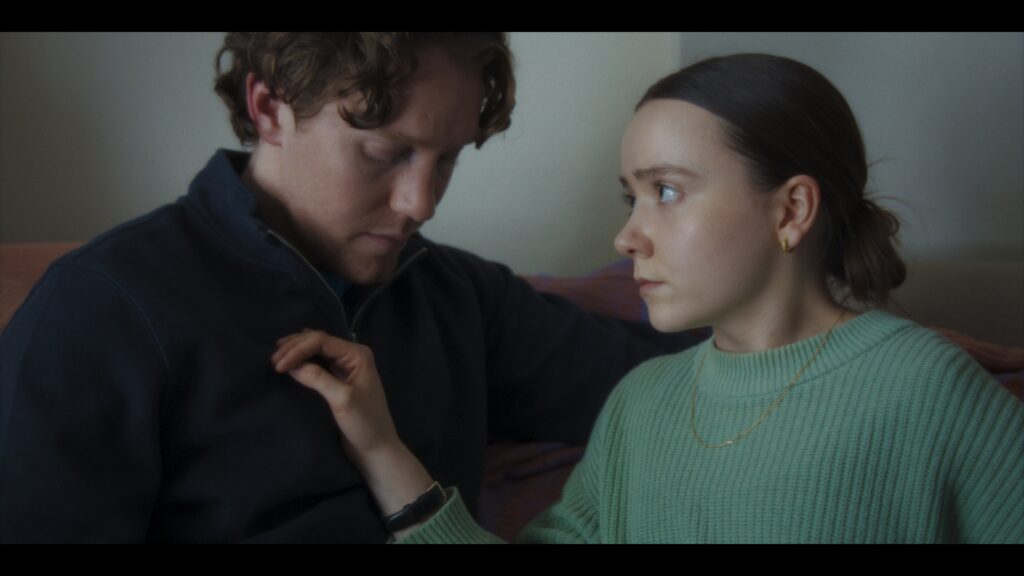
A still from Hugo’s film ‘Scratch’
I recently finished a short film called Scratch that sought to reverse this language and explore what it’s like hiding an essential part of yourself from someone you love. Despite making films for more than twenty years, I’ve never publicly screened them. I’ve always managed to find something wrong with them – an imperfection that would end up overshadowing everything good. I came to realise this was a symptom of a bigger, more personal problem and challenged myself to overcome it.
As I’m writing this, I’m waiting for responses from festivals who might screen Scratch for a public audience. Whether it gets accepted or not, I know that by submitting it, I’ve taken an important step towards overcoming the shame around my scar and reclaiming the courage it used to represent. I still don’t have the confidence to walk around in public with my scar visible, but with this step, I now know that one day I might.