
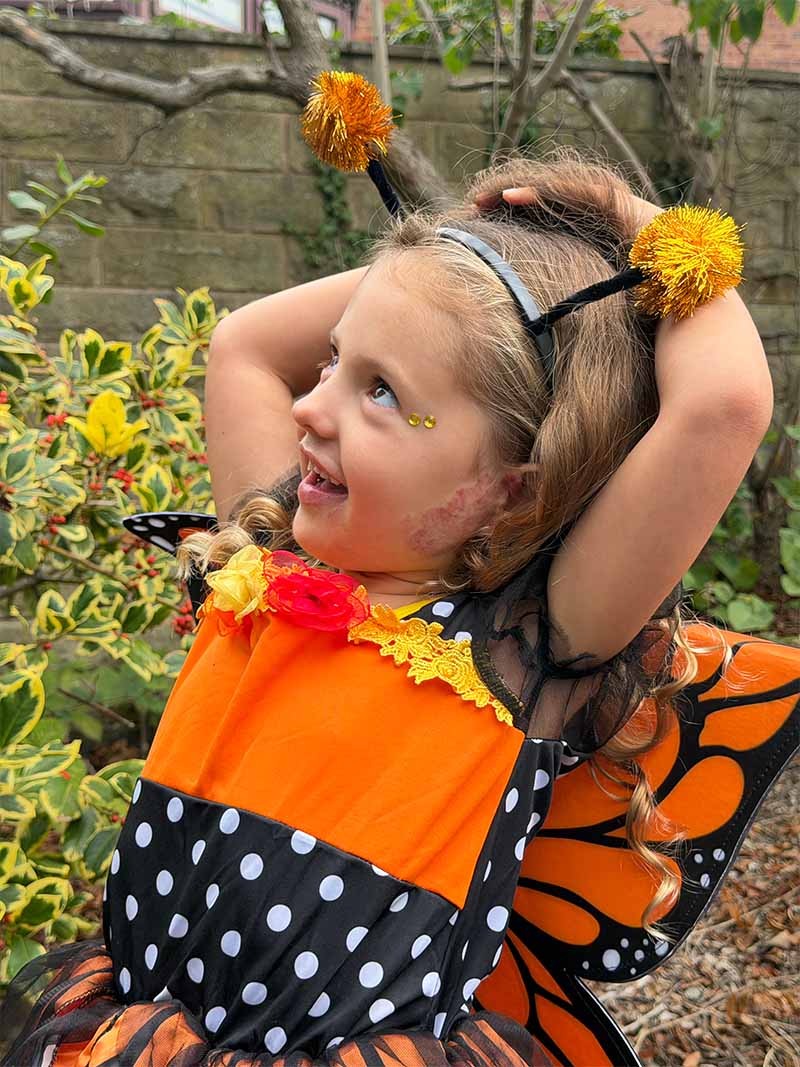
Choosing a Halloween costume with your child can be more of a trick than a treat. The choice is overwhelming, but the real terror comes from the use of visible differences to make costumes “scary”. This Halloween, let’s put a stop to this dated trope and make dressing up fun for everyone!
Halloween parties and ‘trick or treating’ offer the perfect excuse for your child to get creative and dress up. It should be a seasonal celebration that everyone can enjoy, with spooky and fun costumes putting a smile on people’s faces. However, Halloween isn’t always scary for the right reasons for the visible difference community.
Why is using a visible difference as a costume harmful?
Scars, marks and other conditions are frequently used as part of Halloween costumes to make them “scarier”. Unfortunately, this reinforces the problematic idea that a person’s character is defined by their appearance, and that difference equals evil. You only need to think of James Bond villains, horror characters such as Freddy Krueger and Disney baddies like Scar and Captain Hook to see how ingrained this damaging trope is in society.
What is “just a costume” to some, could be the cause of name calling and nasty comments for others, particularly during the Halloween season.

Stop making visible difference the villain
Have you signed our petition to create a future where people with visible differences are seen in all kinds of roles, not just the villan
How can parents choose an inclusive costume?
Inclusive doesn’t have to mean boring. There are plenty of great costume ideas that don’t rely on scars, marks or other visible differences to create fear.
Here are some examples for inspiration:
- Autumnal themes such as the classic pumpkin, perfectly modelled by Finley below
- Animal costumes like Lola’s beautiful butterfly
- Spooky monsters such as vampires and ghosts that don’t need scars to be scary
- Your child’s favourite book, TV or film characters e.g. Superman or Spongebob Squarepants
Be guided by your child’s interests and let them get creative!
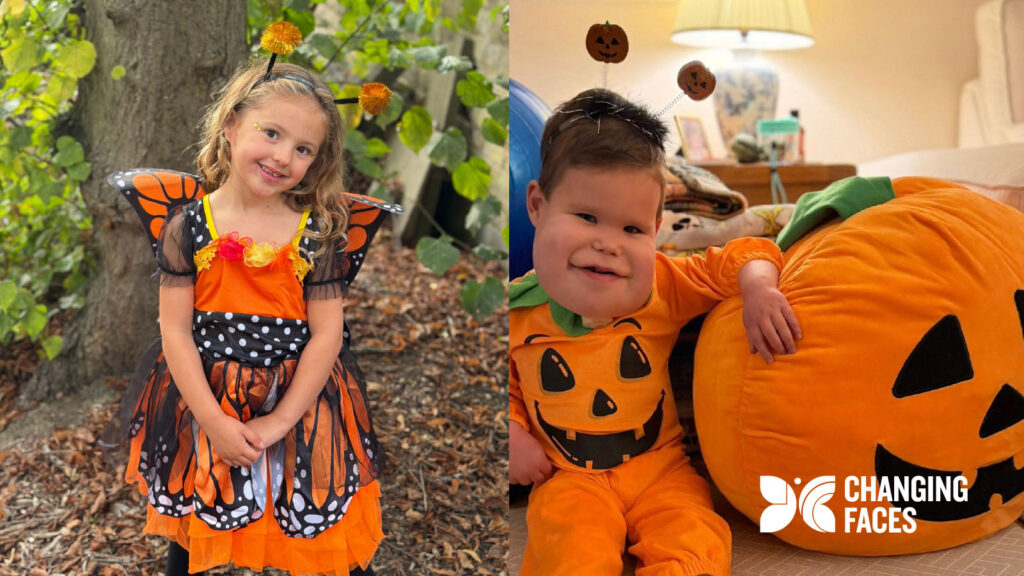
Lola and Finley in their Halloween costumes
How to talk to your child about visible difference
It can be difficult to know how to have conversations about visible difference with your child, but it doesn’t need to be complicated. A few simple ways to talk to your child about visible difference are:
- When choosing a Halloween costume, encourage your child to think about how a costume featuring scars or another condition might make someone with a visible difference feel. Building empathy and highlighting the importance of being kind is key.
- Watch a TV show or film together that features a person or character with a visible difference. Ask your child their thoughts on that character and let that direct the conversation, reinforcing that being unique is something to celebrate and not something to be ashamed about or afraid of.
- Talk about diversity more generally and how someone being different to you, doesn’t inherently make them scary, bad or wrong in some way. We have a list of recommended resources that promote diversity and inclusion, which could be a great place to start the conversation.
What parents say
“Lola absolutely loved dressing up, and we had so much fun going down the whimsical route. It also gave us a really good opportunity to talk about why we don’t need to use scars or visible differences to make a costume scary. It was an important conversation for us, and we both learnt a lot from it. You can still have a really magical, fun Halloween without making visible difference the costume.”Lucy, Lola’s mum (@LucyBrooksSays)
“Finley absolutely loves pumpkins, so dressing him up as one for Halloween was a really easy choice! We wanted him to have fun and enjoy dressing up, while showing that you don’t need to use scars or visible differences to make a costume spooky. There are so many fun and creative options out there, and I think Halloween is a great opportunity to let children’s imaginations run wild.” Gemma, Finley’s mum (@Feathercat.And.Finn)
This Halloween, it’s time to ditch the stereotypes and make sure that every costume is a treat, not a trick for the visible difference community.