
My name is Bianca and when I was around 12 or 13 years old, I started to develop keloid scarring, as a result of acne on my face, back and chest. As I got older, the scars developed more, particularly along my jawline. Building confidence with keloid scarring has not been a linear journey, but I am so proud of how far I’ve come.
Keloids are an overgrowth of scar tissue that form after trauma to the skin. The scar tissue grows continuously, and they can itch, burn and give shooting pains on a daily basis.
Growing up, I was always trying to hide my scars. I loved winter because I could cover them with big coats and woolly scarves. I hated having to endure stares and comments.
I underwent two rounds of keloid surgery, both unsuccessful. In 2017, the keloids returned, bigger than before. After that, I felt defeated. I convinced myself that surgery was a mistake and that no one could truly help me.
But eventually, I was so exhausted from hiding and covering up constantly that I decided to share a collage photo on Instagram. It was two pictures of me side by side – with my keloids showing on the right, and with them edited out on the left – alongside a short post about my story. I was surprised by the love, positivity and support. That day was my first step to freedom and I’ve continued to grow stronger day by day.
Even though my keloids drastically changed after surgery, the fear of being judged didn’t disappear overnight.
In 2023 I was given the opportunity to attempt surgery again, through a tv show. I certainly didn’t rush into the decision like when I was younger. I took time to weigh out my options. I sought professional advice and learned more about the keloid specialist who would undertake my surgery.
I was told my keloids were likely inactive, as there had been no new growth for several years. That expert guidance, combined with the confidence I’d built through sharing my journey, gave me the reassurance I needed to try again.
Thankfully, this time, the surgery was a success.
However, I went into it prepared for all outcomes. I had accepted that it might not work and reminded myself that surgery was only part of the process. Recovery involves ongoing aftercare – injections, laser treatments, taping – and requires patience and commitment.
Recovery wasn’t easy. I experienced radiation sickness, and had to rest extensively, surrounded by loved ones. Being far from home made it even more emotional.
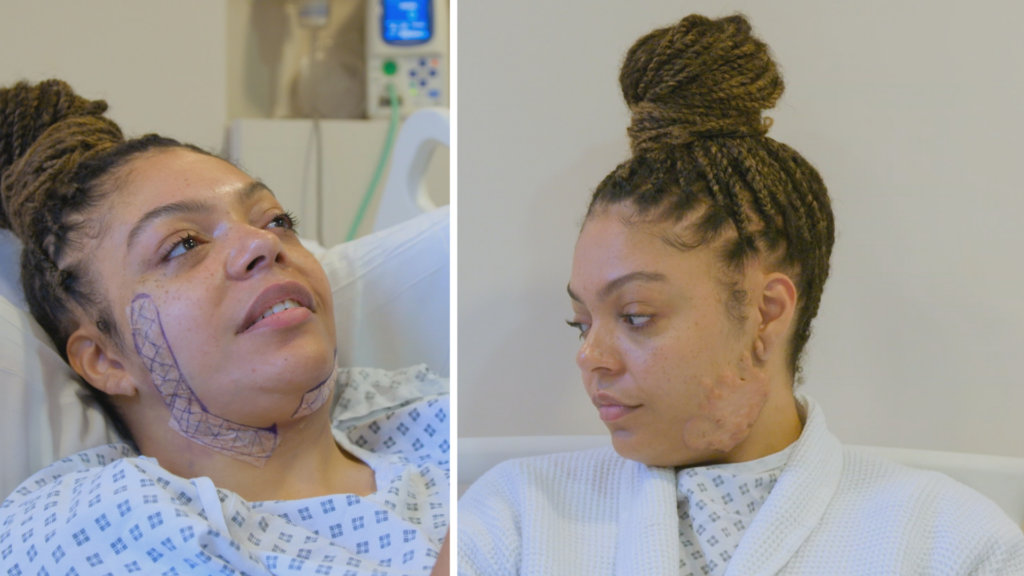
Bianca decided to have surgery to improve the size of her keloids and to relieve the constant itching and burning.
After surgery, your skin is swollen and inflamed. During my healing process, I noticed lumps and bumps that terrified me. But healing isn’t linear. Consistency with aftercare and following professional advice is crucial.
And it’s important to say: keloid surgery does not work for everyone. Every person’s skin heals differently. My decision was driven by a desire to raise awareness on television, improve the appearance of my scars, and stop the constant itching and burning. The relief from that discomfort has been life-changing.
Even though my keloids drastically changed after surgery, the fear of being judged didn’t disappear overnight. Confidence is something I continue to build.
Representation would help to build confidence with keloid scarring, and I would have learnt to love myself if I’d seen someone my own age or older rocking their keloids when I was younger. There’s not nearly enough awareness in the world about keloids. Since sharing my journey in 2017, I have met other keloid warriors who share their stories and their treatment experiences, which is so great. Seeing that visibility now is incredibly powerful.
For nearly ten years, I’ve continued sharing my journey online to create a supportive, positive space where people feel accepted. Some individuals share their stories for the first time in this community, and you can almost feel the weight lift from their shoulders.
I also held an event for keloid warriors in London to connect with people with similar journeys. It was wonderful to connect with the community in person.
Looking back at who I was in 2017 compared to now, I can see just how much I’ve grown.
I can finally say that I love and accept my skin. I’m still learning to strengthen my confidence every day, but I’m proud of how far I’ve come.
If I could offer one piece of advice to anyone living with visible differences, it would be this:
Never compare yourself to others. You are unique. You are beautiful. You are strong. And you are capable of handling anything life places in your path.