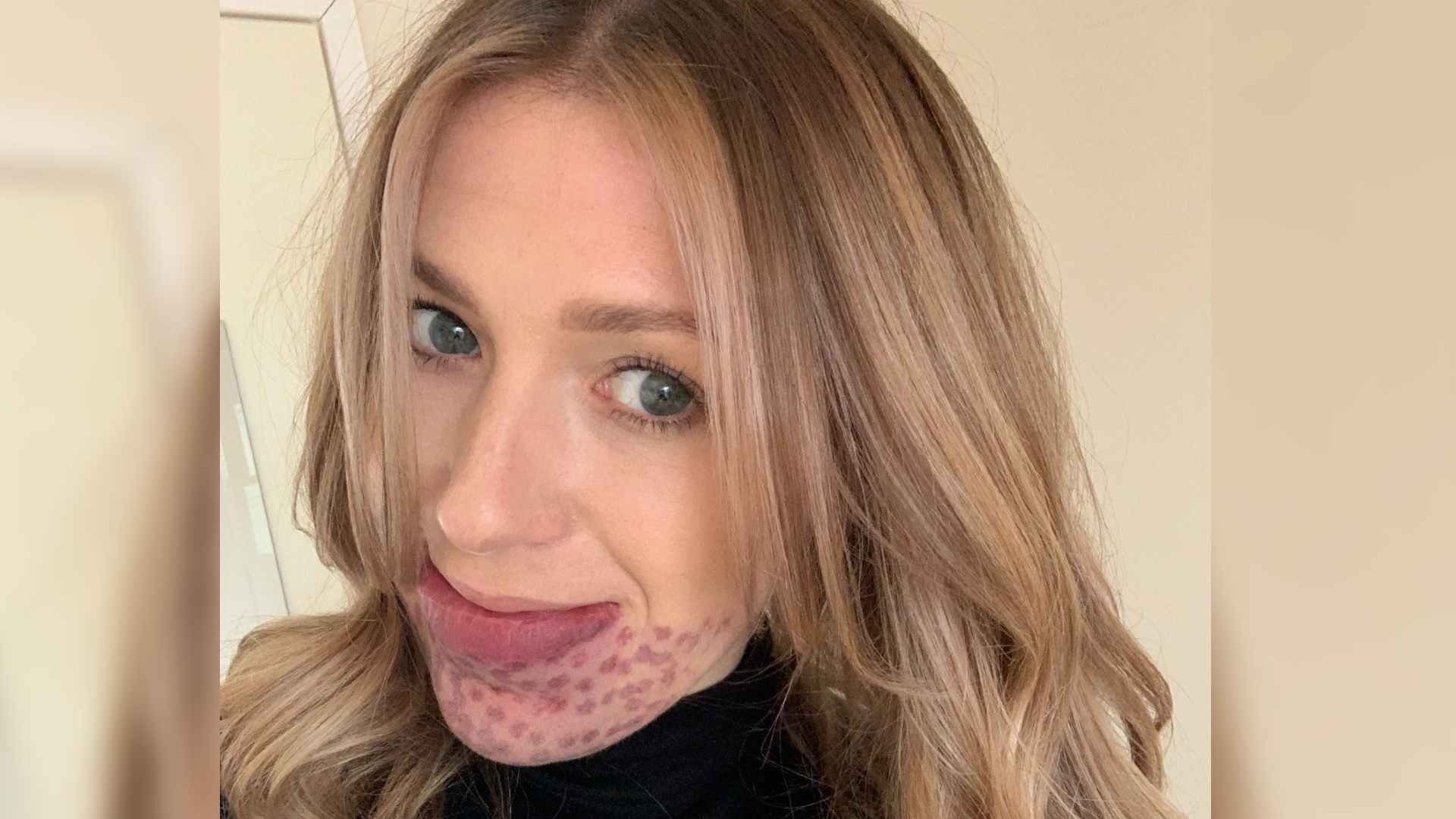
Growing up with a port wine stain birthmark shaped me in many ways – both challenging and strengthening me. I was aware of being “different” from an early age, especially in school where appearance can feel so important. I still remember my first day at nursery, when a child asked if I had Ribena on my face! They later became one of my closest friends, a reminder that children’s curiosity often comes from innocence, not malice.
Those early experiences helped me develop resilience and confidence, even during tougher moments in secondary school. With the support of my family, friends, and teachers, I learned to embrace who I am and went on to achieve the highest GCSE grades in my year, despite missing a lot of school for regular laser treatments.
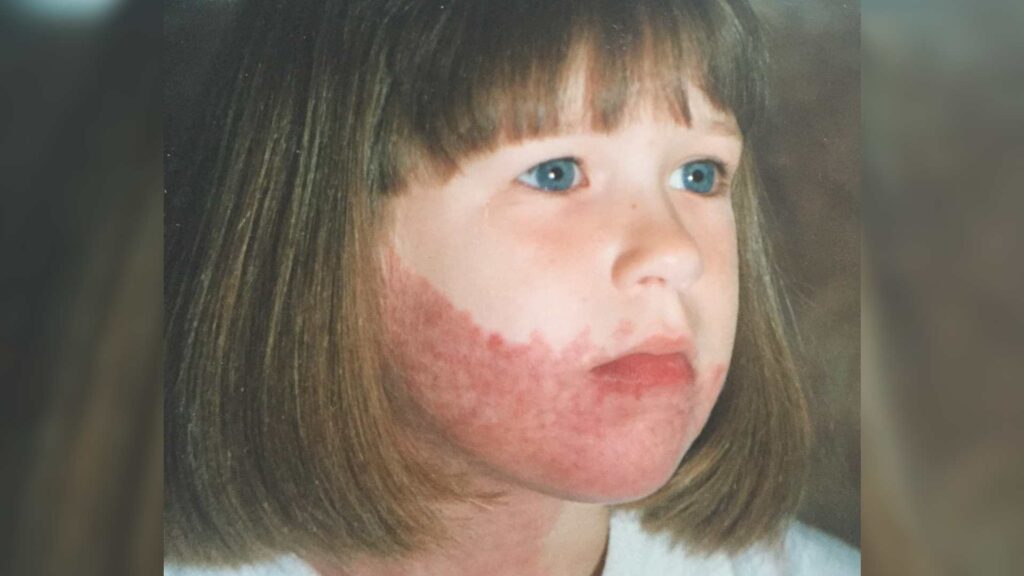
Sarah took other children’s curiosity and used it to grow her resilience
As an adult, my visible difference continues to shape how I connect with others – as a teacher, colleague and parent. I know what it feels like to be “seen” for the wrong reasons, and that awareness drives my passion for inclusion and kindness both in and outside of the classroom. When I began teacher training, I was asked if I worried about students’ reactions. I did, but I was also ready to have those conversations, and I’ve found that openness quickly turns curiosity into understanding.
I do experience stares and comments sometimes – especially from younger pupils who are naturally curious or the new Year 7s coming up who have never met me before. I’ve learned to handle it calmly and with openness. I try to see these moments as opportunities for education rather than confrontation.
If a student asks or stares, I explain simply and confidently what my port wine stain is and that it’s just part of who I am. I also share my lived experience regularly with students, especially when delivering topics such as anti-bullying and diversity. This approach usually puts them at ease and helps normalise visible differences. It’s amazing how quickly we can build understanding when we handle these moments with honesty and warmth.
Many schools are taking great steps in the right direction when it comes to educating students on diversity. The school where I teach has a strong and inclusive curriculum, with tutor-time activities that encourage open discussion about difference, kindness and belonging. I’m proud to be part of an environment that values these conversations.
That said, not every school has the same focus or resources and there’s always room to grow. Education plays such a powerful role in shaping how young people see the world and each other. Without it, children can sometimes fall back on stereotypes or uncertainty. By weaving lessons about difference, empathy and representation into everyday learning, we can help students understand that diversity – whether in appearance, ability or background – is something to be respected and celebrated.
Let’s create a world where children with visible differences can grow up feeling just as happy and confident as anyone else.
As teachers, we need to be open and honest when educating children about visible difference. Children take their lead from us – if we seem uneasy, they will be too. When questions arise, answer them clearly, calmly, and kindly. A simple, factual explanation often helps to normalise visible differences and encourages understanding.
Using inclusive language and resources in the classroom is also essential. Encourage empathy, celebrate diversity and model respect in everything you do. One message I often share with my students is that intention and impact are not the same. Someone may not mean to be unkind with a question or a look, but the impact for a person with a visible difference can still be significant. I try to help my pupils recognise this distinction and use both their voices and their actions to create a kinder, more inclusive environment for everyone.
I hope to continue using my lived experience to help others feel seen, supported and strong in their own skin. I’d love to see more representation of people with visible differences in all areas of life – education, media, workplaces – so it becomes something that no longer feels “unusual.”
Understanding should replace curiosity, and acceptance should replace pity. Let’s create a world where children with visible differences can grow up feeling just as happy and confident as anyone else.
Becoming a parent has deepened my motivation to advocate for visibility and kindness. Learning from Changing Faces’ research that children with visible differences are twice as likely to be unhappy really struck me. It’s why I want to use my voice and experience to help change that.
If my story helps even one young person feel proud of who they are or less alone, then it’s worth sharing.