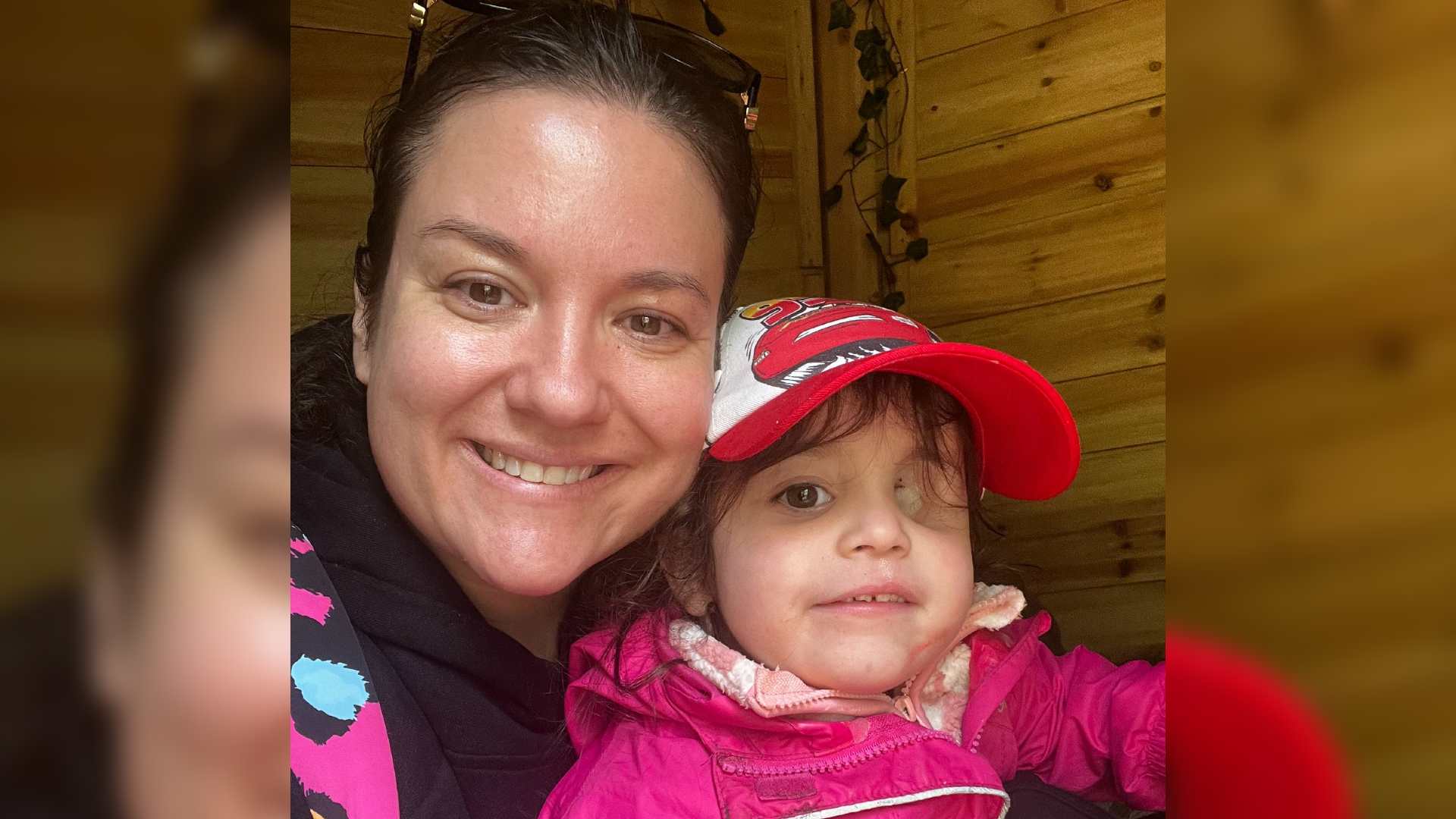
My little girl, Nuala, was born a healthy baby and completed our family alongside her big brother Jack. Life with two children ticked along happily until she was 9 months old, when we noticed her eye becoming increasingly bloodshot and changing shape. After a visit to A&E and specialist referrals, we were given devastating news: she had an ultra-rare cancer growing behind her left eye.
Doctors explained that the only way to save her life was to remove her eye and the muscle behind it. It was an incredibly difficult decision, but one we had to make. Overnight, Nuala became a child with a visible facial difference. She was too young to understand, but as her parents, we found it emotionally overwhelming and worried about what the future might hold.
At first, we put an eye patch on Nuala whenever we left the house. It felt like a way to shield both her and us from stares and questions. Even so, people would often ask why she was wearing it – whether she had a “lazy eye” or “what was wrong.” Depending on how strong we felt that day, we either told the truth or avoided it.
The turning point came when I attended a Changing Faces webinar. It helped me understand how to support Nuala, how to respond to questions, and how to reframe her difference as something to be proud of. After all, it represents everything she has overcome.
Our aim is to raise Nuala to feel proud of who she is and how she looks.
As Nuala grew, her personality blossomed. She became confident, chatty, and full of character – she decided she didn’t want to wear her patch anymore. Going out without it brought new challenges. There were still stares and comments, which could feel painful, but there were also positive interactions that felt empowering. We began to see these moments as opportunities to share her story and raise awareness.
Children are naturally curious and often ask directly why she has no eye. We welcome those conversations. We explain, just as we have to her, that her eye was very poorly and the doctors had to take it away to make her better so she can play with her friends. Now Nuala proudly tells people this herself, sharing how brave she has been. Most children accept it quickly and move on.
It’s often adults who find it harder. Sometimes they avoid the conversation altogether, even moving their children away. That can feel more upsetting than the honest curiosity of a child.
We know there may be challenges ahead as Nuala starts school and grows older. But our aim is to raise her to feel proud of who she is and how she looks. Some days are harder than others and parenting a child with a visible difference can be emotionally tiring. But above all, we are incredibly proud of Nuala – her courage, her strength, and her resilience.