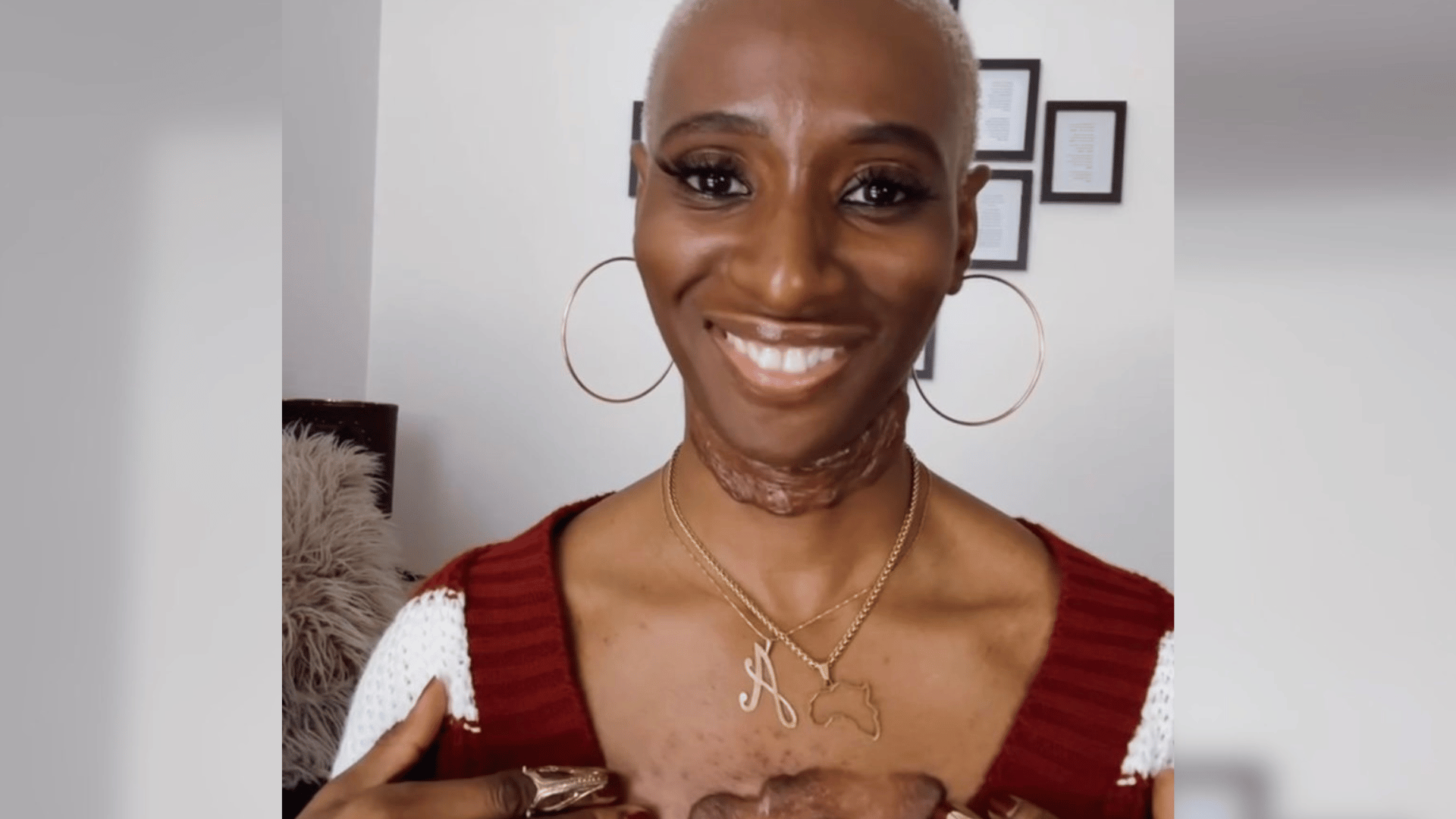
I’m Ada and I developed keloid scars, which are caused by excessive collagen, after a thyroid operation I had as a teenager.
The thought of how people might react to my scarring always concerned me. Before I would leave the house, I’d be filled with thoughts about whether people were going to stare at me or ask questions. This constant anxiety made me hide within myself.
I’d not seen many people with my condition, and it made me feel like I was alone in my experiences. My confidence took a huge hit.
I was never offered any mental health support for keloid scars, and I wasn’t signposted to any organisations like Changing Faces. Even if I had been, I don’t think I would have been ready to engage with that kind of support at the time. I was still not fully accepting of my scars and was holding onto hope that the NHS would be able to remove them.
Self-acceptance is an ongoing journey, and not something that happens overnight.
Thankfully, I’m in a better place now. I haven’t fully accepted my scars, but I’m learning to embrace them as part of who I am. Recognising that there is beauty in every skin tone, texture, and imperfection has been powerful. Our skin and bodies are not, and should not be seen as, flawed.
You may feel like you are alone or the only person going through it, but you aren’t. There are communities out there who can support, encourage, and inspire you, so try to find one that resonates with you and connect with it.
We have to give ourselves grace and learn to be kind and patient with ourselves. Self-love and acceptance can take time, but they are both possible.
When artist Dylan Lisle offered to paint my portrait, I went through a lot of conflicting feelings. Dylan, who has his own experience of living with a visible skin condition, connected with my story and wanted to capture it through his work.
My initial response was actually “no”, which I think was a natural reaction to being asked to do something so far outside of my comfort zone. But I quickly changed my mind because, in that moment, I realised it was about allowing myself to be open to new opportunities and pushing myself beyond the limits I had placed on myself.
Being painted was surreal because it was never something I could have imagined myself doing. I was definitely nervous, but it ended up being a really positive experience.
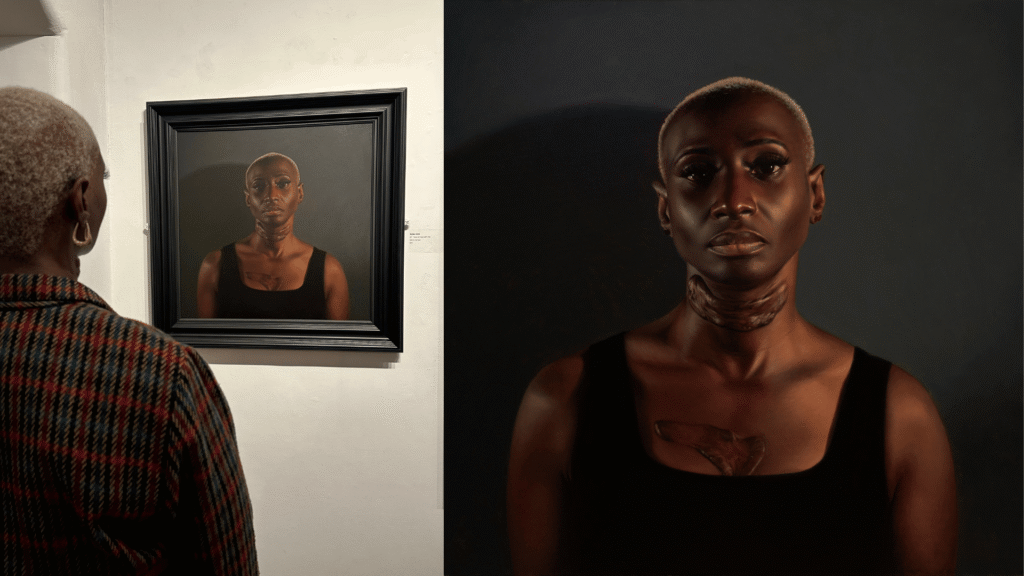
Agreeing to have her portrait painted was a big step forward for Ada
Seeing the portrait go on to become a finalist in The Royal Society of Portrait Painters Annual Exhibition was so special. Who would have thought that the very thing I had spent so much time hiding and feeling afraid to show would one day be hanging in a gallery and recognised in that way? That moment meant a lot to me.
Self-acceptance is an ongoing journey, and not something that happens overnight. Has being painted helped me? I would say yes, even if only in a small way. It encouraged me to look at myself differently and embrace parts of myself that I once struggled with.
I hope it shows others with visible differences that opportunities like this are available to us too, and that we do not need to hide ourselves or feel limited because we look different.
Moving forward, I want to help reduce the social stigma surrounding visible differences.
I would love to see healthcare professionals, as well as the beauty and skin industry, do more through education, resources and research to improve understanding of both treatment options and the emotional impact that visible differences can have on those navigating them silently.
I also hope to see more inclusive experiences and representation across different spaces, where people with visible differences feel seen, considered, and accepted rather than overlooked or excluded.
As a community, we need to continue to become more visible and more confident in owning our space. I want us to be in rooms openly having conversations about the gaps in awareness, treatment options, and the lack of accessible specialist support that many of us feel exists here in the UK.
Through those conversations, I hope we can create more understanding, more support, and ultimately real change for future generations navigating visible differences.