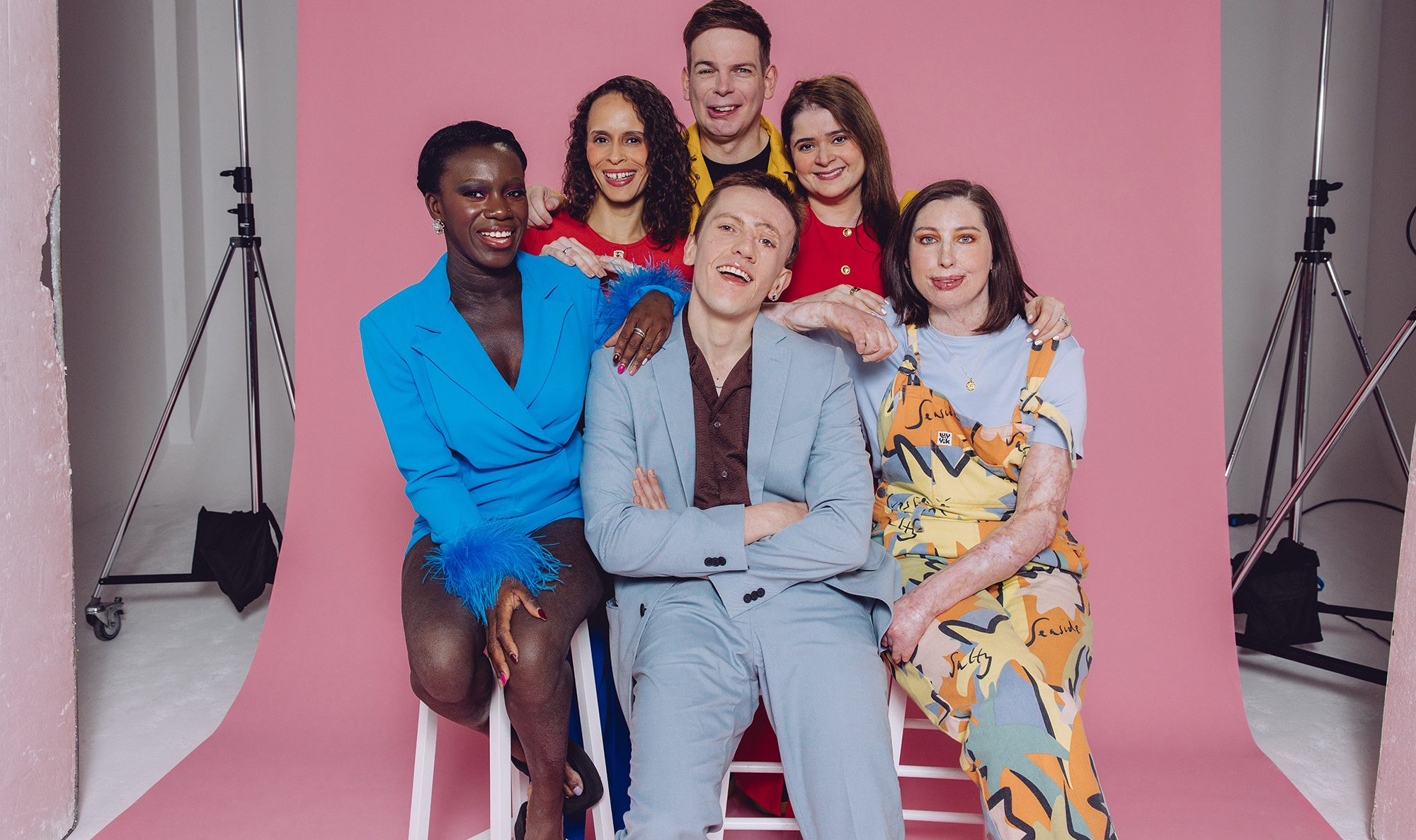
Changing Faces has worked with the Creative Diversity Network (CDN) to add visible difference as a category in Diamond, the industry’s diversity data monitoring and reporting platform. It now sits alongside the existing categories of age, disability, ethnicity, gender, sexual orientation, and religion or belief.
More than 4.9 million people in the UK have a visible difference, such as a scar, mark or condition that affects their appearance. Until now, there has been no industry-wide way to count them, on screen or behind the camera to measure representation. This change gives broadcasters and production companies the evidence they need to see where people with a visible difference are present, where they are missing, and how they are portrayed.
Diamond collects workforce data on representation on and off-screen in the UK television industry enabling broadcasters, producers and others to set their strategies to increase inclusivity. Through this collaboration, we can ensure that effective monitoring and measurement of visible difference across the UK TV broadcasting industry is introduced for the first time. This will allow our organisations to work together to build on the data over time, including understanding whether people with visible differences are being cast as positive or negative characters.
Why this matters for the visible difference community
For too long, film and television have used visible difference as visual shorthand for villains, monsters and characters meant to be feared. These portrayals don’t stay on screen. They shape how people with visible differences are seen and treated in everyday life, from the playground to the workplace.
Counting visible difference in Diamond means organisations can work together to build on the data over time, including understanding whether people with visible differences are being cast as positive or negative characters.
Stop making visible difference the villain: sign our petition
Adding visible difference to Diamond is a vital first step, and it is one of the two changes at the heart of our new petition, Stop Making Visible Difference The Villain. We are calling on broadcasters, streamers, casting directors and the wider screen industry to:
- Commit to telling more positive, nuanced stories about people with visible differences
- Measure representation so that real progress can be made.
The petition is backed by actors Robert Rhodes (House of the Dragon, 28 Years Later) and Beau Bradfield (Malory Towers, Netflix’s Sex Education). Beau says: “I want children growing up with visible differences to see characters who look like them being heroes, friends, parents and love interests – not just villains.”
Add your name today at action.changingfaces.org.uk and help create a future where people with visible differences are seen in all kinds of roles.
Who are the Creative Diversity Network?
The Creative Diversity Network (CDN) is the UK’s leading authority on diversity and inclusion in television. Its mission is to help the broadcasting industry become truly inclusive and representative of the society it serves. By championing diversity in all its forms, CDN strives to ensure that UK television not only entertains but also authentically represents its audience.
Their members include sone of the UK’s most well-known brands in the television industry, including the BBC, ITV, Channel 4, Sky, Paramount, UKTV, Warner Bros. Discovery, BAFTA, Pact, ScreenSkills and Lumo TV.
What is Diamond?
Diamond (by CDN) collects anonymous data on who works in UK television, so the industry can see who is included, who misses out, and why. This helps organisations make better decisions about skills, interventions, funding and development aimed at building a more open, inclusive sector.