I was first diagnosed with strabismus, commonly known as a squint, at the age of two. This means that both of my eyes don’t look in the same direction. As a child, my eyes turned inward, but as I grew into an adult, they drifted outwards.
The only memories I have of my squint from childhood relate to two surgeries that sought to straighten my eyes. I remember being told that if I didn’t get my eyes straightened, I would get bullied. The ironic thing is, I don’t remember any childhood bullying, despite my medical records stating that it was happening.
My childhood surgeries were deemed successful, and I never gave my eye misalignment much thought until my 20’s. Over time, my eyes started to gradually drift out. The drift was subtle, and I didn’t notice it in the mirror, but what I personally couldn’t see was clearly visible to others.
People would ask if I had a “lazy eye”, to which I would usually reply that I used to, but it had been fixed. At this stage in my life, I didn’t see my difference, but others clearly did. The comments grew more frequent: “Oh, you have a funny eye”, “Do you realise your eye is turning out?”. It was through comments from others that I began to internalise my difference. I moved from a stage in my life where I didn’t think about it to a point where it was the only thing I saw when I looked in the mirror or took a photo.
I will never have straight eyes, and I will never be truly “fixed”. Accepting that, rather than chasing perfection, has been an important process.
My eye misalignment impacts my work and my ability to develop and maintain relationships. Eyes are integral to developing connections with people, but when I have conversations, I keep thinking that they are staring and judging. Sometimes I can’t focus on conversations, and I struggle to maintain eye contact. I feel like my eyes act as a barrier to truly connecting with people.
There are occasions where I forget how my eyes look. It is often in those moments that my guard drops, and someone makes a comment. The comments often aren’t overtly rude, but they are enough for you to realise that you look different. I then fall back into a cycle of thinking about my eyes and continually anticipating negative comments.
Photographs are tough. I usually delete them if my eye looks really misaligned. Or I use the trick of camouflaging them with sunglasses or take pictures at particular angles. I do this because society tells me that the way I look is something to be mocked, with comments like “boss-eyed” and “cross-eyed” ringing in my head.
People like me are traditionally represented on TV and film as unintelligent or villains. This is why it was so important to see Hannah Hampton, England’s goalkeeper, talk openly and positively about the condition during the European Championships in 2025. Representation in the media is so important for changing people’s preconceived ideas, and seeing Hannah discuss the condition in the mainstream media was empowering.
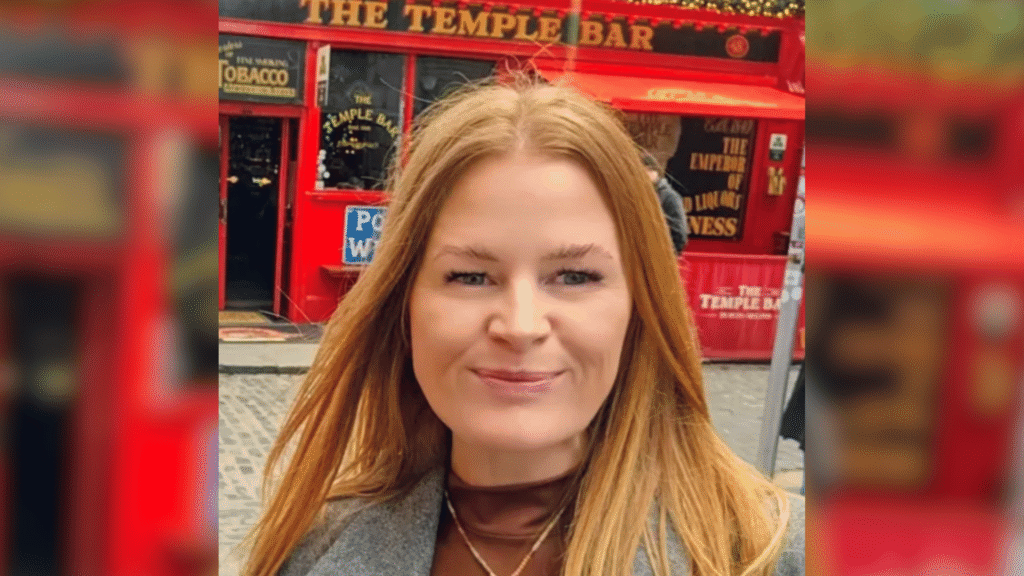
Charlotte finds having photographs taken of herself difficult because of her strabismus
I am due to have my fourth eye surgery soon, and it feels like a betrayal to the visible difference community that I am seeking medical solutions to align with societal standards of a “normal” physical appearance. Even though I want surgery to get straighter eyes, I acknowledge it’s important not to keep chasing a societal ideal that doesn’t exist for me. I will never have straight eyes, and I will never be truly “fixed”. Accepting that, rather than chasing perfection, has been an important process.
I have found online communities an important form of social support. Hearing the parallels between my story and the stories of others brings comfort. But as an academic and a researcher, I found a disconnect between the real-life stories in online forums and the way our experiences and voices were represented in academic research. I wanted to use my position as a researcher to make our realities heard.
I have just had an autoethnographic paper published in the Journal of Health Psychology that tells my story of living with a squint. I hope this research will encourage others to conduct research that foregrounds the voices of those with visible difference. I want researchers and medical professionals to hear our silenced stories, with the hope of improving practice and reducing stigma.
My proudest moment as someone with a visible difference is publishing that paper. I have spent a lifetime trying to minimise, conceal and hide my visible difference, but here it is, on paper, published in an academic journal for the world to see.