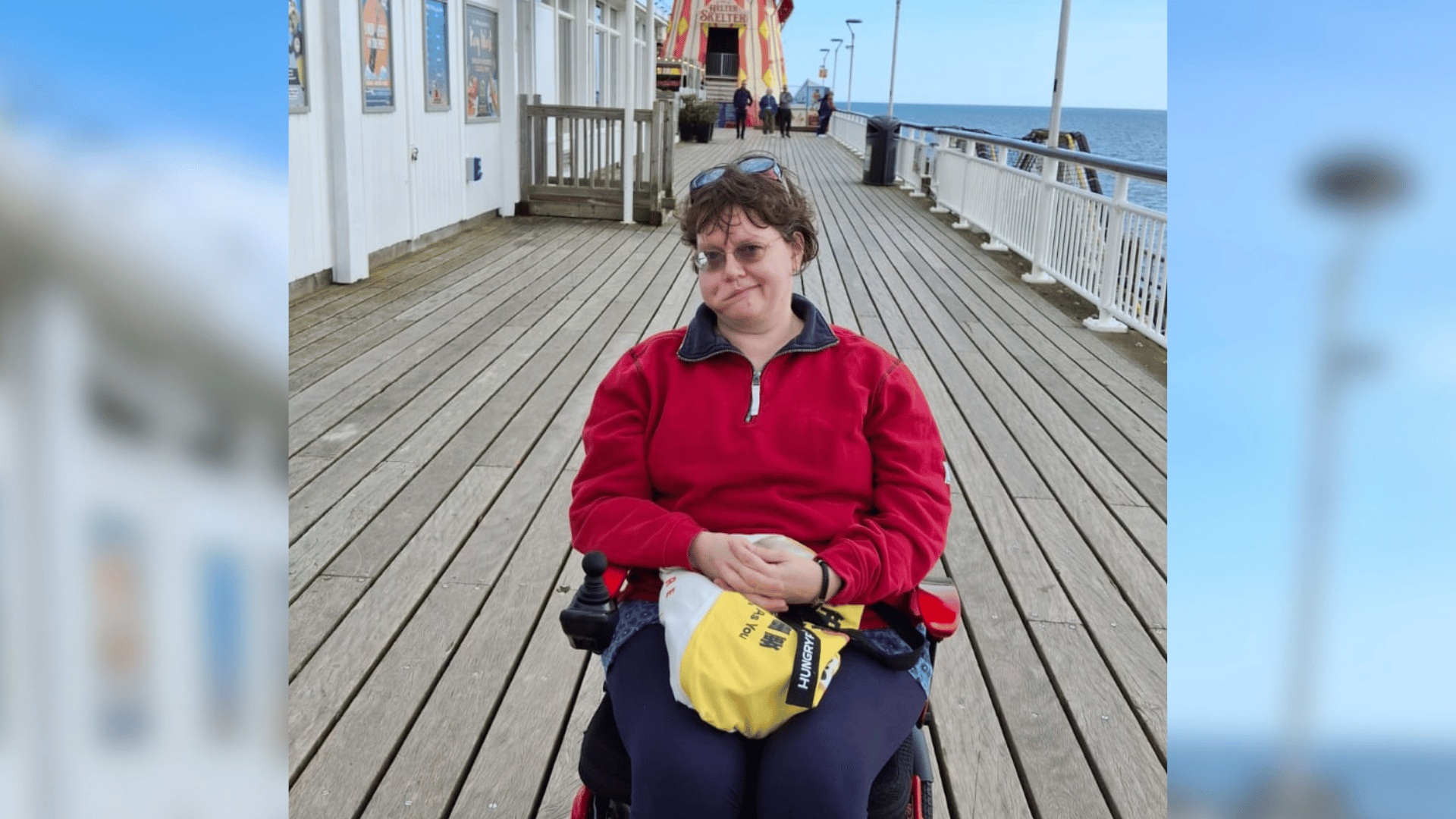
I developed facial palsy on the right side of my face after surgery to remove an unexpected, benign brain tumour. The sixth and seventh cranial nerves have become paralysed, and there is no expectation of re-animation.
Going into the operation, my face was “normal”, when I woke up, everything had changed. I was not made aware of the possibility that this could happen, which made it twice as hard to come to terms with.
In February 2026, I had surgery where tissue was taken from my thigh and put in my cheek to support the muscles. My face now looks less wonky than it did, but I’m still getting used to it.
My right eye also wouldn’t close properly due to the palsy, so I had an operation to put a gold weight in my eyelid. My eye now closes better, and I don’t need to use as much eye gel or drops, which is more comfortable.
This is the face I’m going to inhabit for the rest of my days, so there is no reason not to do the things I did before.
There isn’t a corner of my life that hasn’t been affected by this “incident”. I was a confident, outgoing person who was known by my smile. It shatters my heart that I can no longer smile as I used to. My speech has also been affected.
I have a family history of deafness, so I have always prided myself on my ability to be easily lip-read. Again, it crushes me that I can no longer do this and provide a helpful aid to family and friends that are hard of hearing.
The palsy has also affected how my right eye moves and works, meaning I now have constant double vision. I have had a squint surgery, but the double vision seems here to stay. To help reduce it, I have a prism attached to my glasses, but I’m no longer able to drive. I haven’t yet stopped being upset by this.
Luckily, I haven’t experienced any negativity, just curiosity. At first, I wore a patch over my eye, and a small girl asked me about it while we were both waiting at the pharmacy. A friend’s five-year-old son saw me wearing my patch and was thoroughly impressed that his mum was friends with a pirate!
My visible difference did make me question if I would be able to make connections with people like I used to before I acquired it. It seems that I can still make new friends at every turn, but I don’t take it for granted.
Many of the new friends I’ve made since the palsy have said that they didn’t notice and that they see me as “just Angela”. For me, having a visible difference is like when you have a pimple on your forehead and you think it’s the size of a mountain and that everyone is staring at it. I realised that it isn’t, they aren’t, and it will always be a bigger thing to me than anyone else. People who care for me see through or past my visible difference. People that can’t do that generally aren’t worth wasting my effort with.
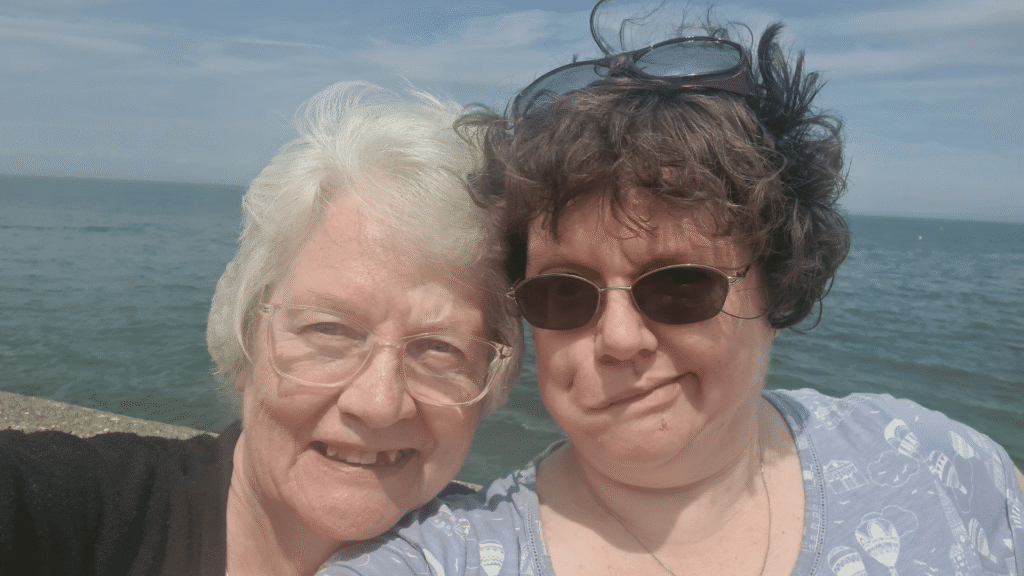
Angela’s mum has been a huge source of support
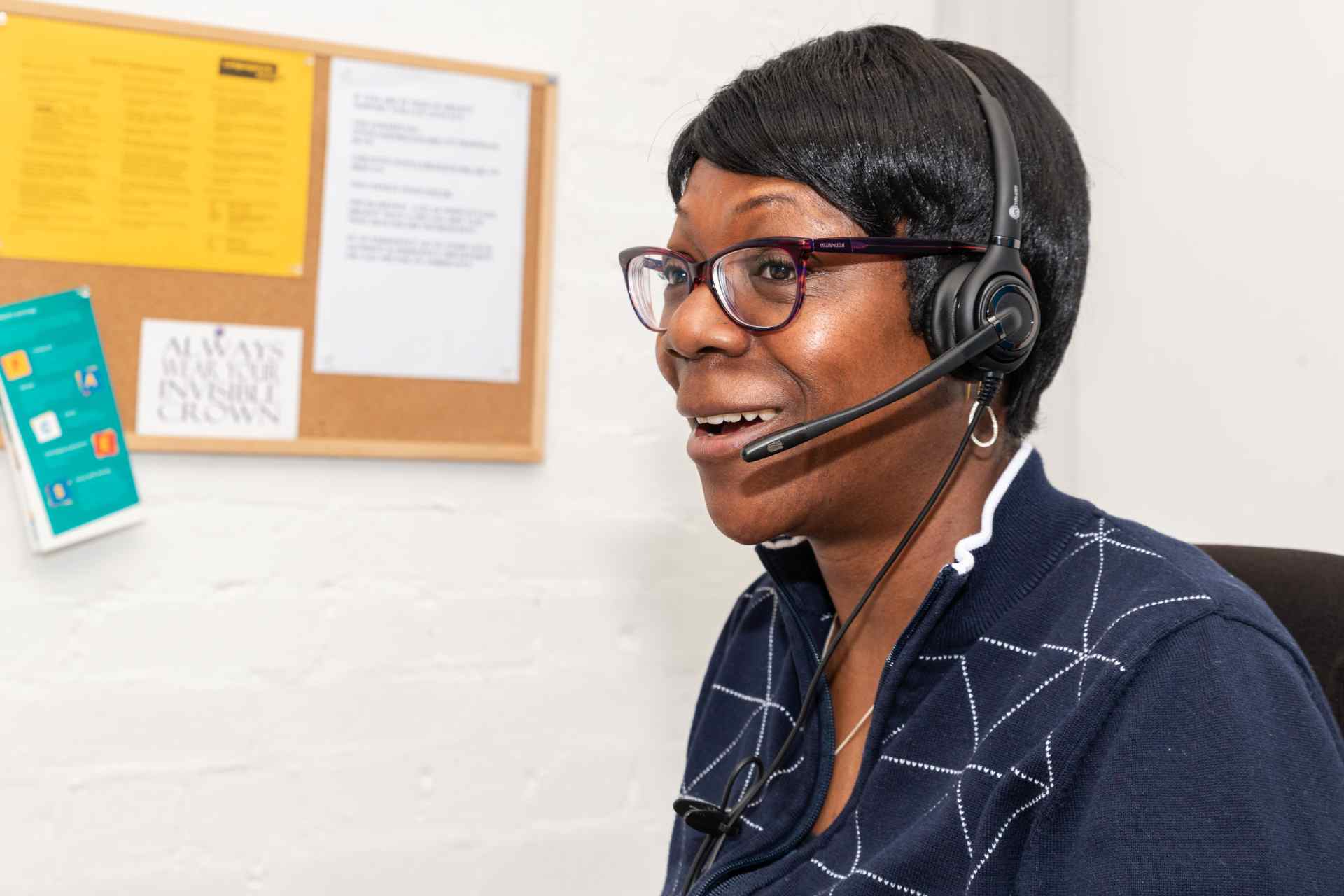
That’s not to say getting to this point has been easy. I reached out to Changing Faces and had some hugely helpful one-to-one telephone support sessions, which have helped me start to come to terms with the change in my appearance, and uncovered other issues that I now need to work on.
Accepting myself with facial palsy has been challenging. I still get taken aback when I see myself in the mirror or in photographs, and I think it will take a lifetime for me to get comfortable with my reflection. However, I have started to take selfies again and have allowed pictures to be put on social media.
This is the face I’m going to inhabit for the rest of my days, so there is no reason not to do the things I did before, like taking selfies on adventures and putting them on Facebook. I have great, supportive friends who are helping me with the adjustments. I know I am still loved, whatever I look like, and I’m grateful to all my friends for holding my hand and walking through this with me.
I hope that the world becomes more tolerant and accepting of differences, and that more people have the sort of positive interactions that I have had.