
Alicia is a bubbly five-year-old who loves arts and crafts, playing with her brothers, and going to the beach. She’s grown up around art, as I too love to draw, and I can see that she has a natural talent for it already.
Alicia was born during the second lockdown with a Congenital Melanocytic Naevus (CMN), a visible birthmark that covers her forehead, extends into her scalp and appears across her body. At the time, we had never heard of the condition. The pandemic made everything feel incredibly isolating, and suddenly, we were navigating something completely unfamiliar without the usual support networks around us.
Thankfully, we were quickly introduced to charities like Changing Faces and Caring Matters Now, the only UK charity that specifically supports individuals and families affected by CMN. The sense of community these organisations offered was life-changing. I joined online meetings through Caring Matters Now at first, and later attended in-person meet-ups when restrictions eased.
Meeting other families who looked like us felt overwhelming in the best possible way. It was like finding a long-lost family – people who truly understood.
I wanted to create something that would help children see themselves reflected positively
When Alicia was a baby, her birthmark was prominent, drawing attention and curiosity regularly from strangers. People would ask: “What’s that on her head?” Those reactions could be difficult, but having a community behind me gave me strength. I saw adults with visible differences living confidently, and there was something powerful about being part of this community. It felt like being part of a wolf pack – stronger together.
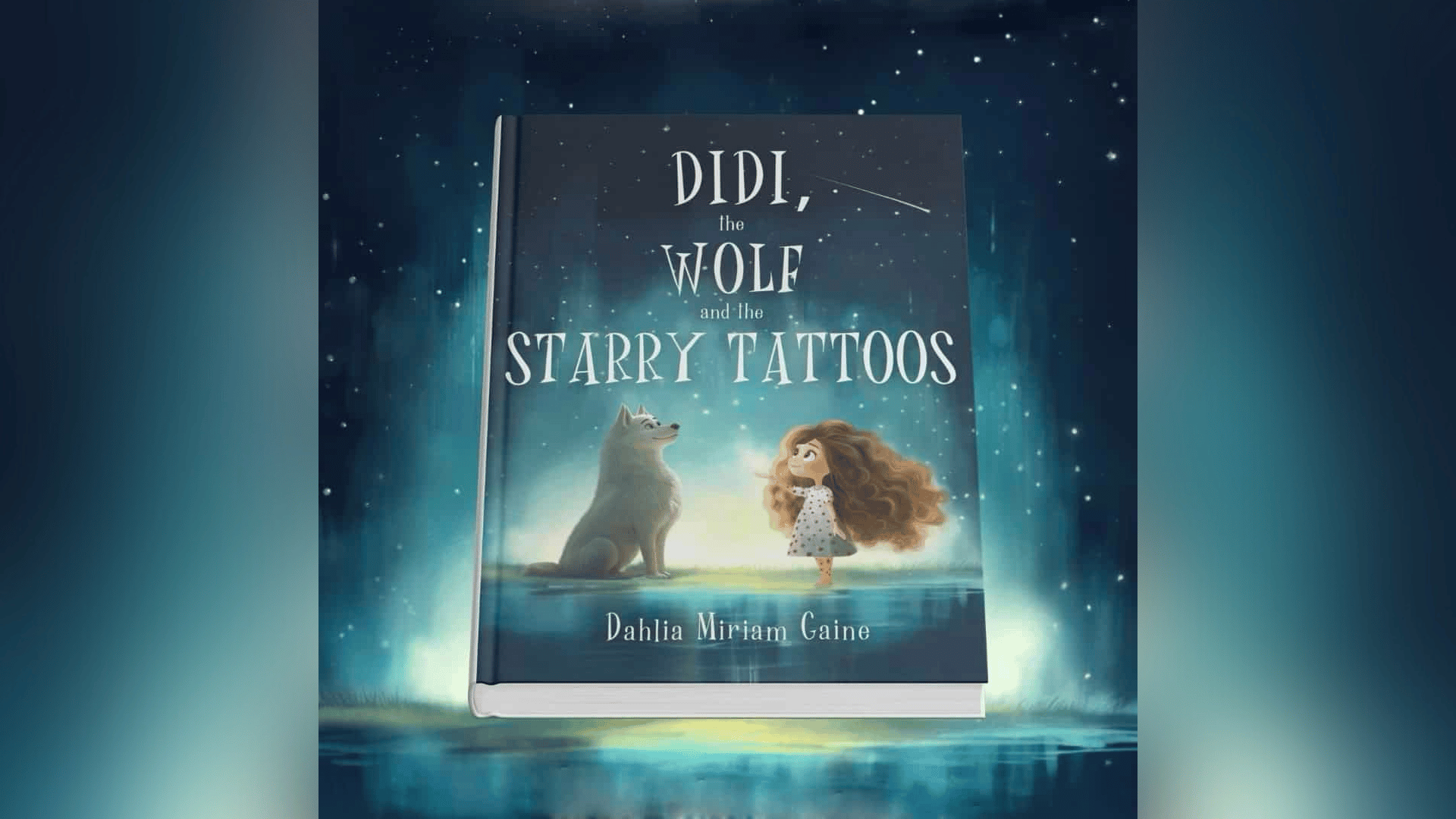
That feeling sparked an idea. I began writing down my experiences of having a child with a visible difference, and those reflections gradually formed a children’s book. What strikes me most is that many young children with visible differences, including Alicia, don’t yet see themselves as different. But school brings questions and curiosity. Words, even innocent ones, can shape a child’s experience.
I wanted to create something that would help children see themselves reflected positively while also educating their classmates. My goal isn’t just to support children with visible differences. It’s to reach the other 29 children in the classroom too. Inclusion isn’t the sole responsibility of the child who looks different. It belongs to everyone.

Congenital Melanocytic Naevus (CMN)
- A Congenital melanocytic naevus is a mole which is present from birth, or which develop in the first two years following birth.
- Moles are a common type of birthmark.
- CMN can cover up to 80% of the body and grows in proportion to the child. Projected Adult size can be calculated from a child’s naevus
- CMN is now understood as a Mosaic Disorder because CMN is caused by a genetic mutation (change) in a single cell of the baby as it develops during pregnancy. This leads to the baby being born with a mixture of normal cells (not carrying the mutation) and disease cells (carrying the mutation), which is referred to as mosaicism. This event can happen to any child, and importantly is not inherited from either parent. Mosaic disorders affecting the skin are most known because it is possible to see the effects on the skin as birthmarks
- For some people, having CMN can take a significant emotional and psychological toll.
- If you are struggling with CMN, there are a number of Changing Faces support services available for you .
Alicia started school this year, and I was determined to have the book ready for that milestone. I wanted her to be able to introduce herself in a joyful, empowering way. Representation matters deeply. When she first held the printed book in her hands, she was amazed. She was pointing at the illustrations, proudly showing her teachers and classmates. Seeing herself in a story gave her a sense of validation that no explanation ever could.
At its heart, the book is about belonging. Discovering the CMN community gave me enormous hope. I realised Alicia wasn’t alone: there were others around the world who shared her condition. Even if she doesn’t see someone like herself in her immediate environment, there is a much bigger world beyond it.
In the story, I use the image of a shared night sky – wherever you are, you’re under the same stars. It’s a reminder that if you ever feel alone, you can look up and know you’re connected. That’s what community feels like: a strong wolf pack, ready to stand beside you.
The response to “Didi, the Wolf and the Starry Tattoos” has been incredibly moving. We’re already in the second print run, and messages from other parents continue to arrive. Many tell me the story resonates deeply, and some say that they couldn’t get through it without tears.
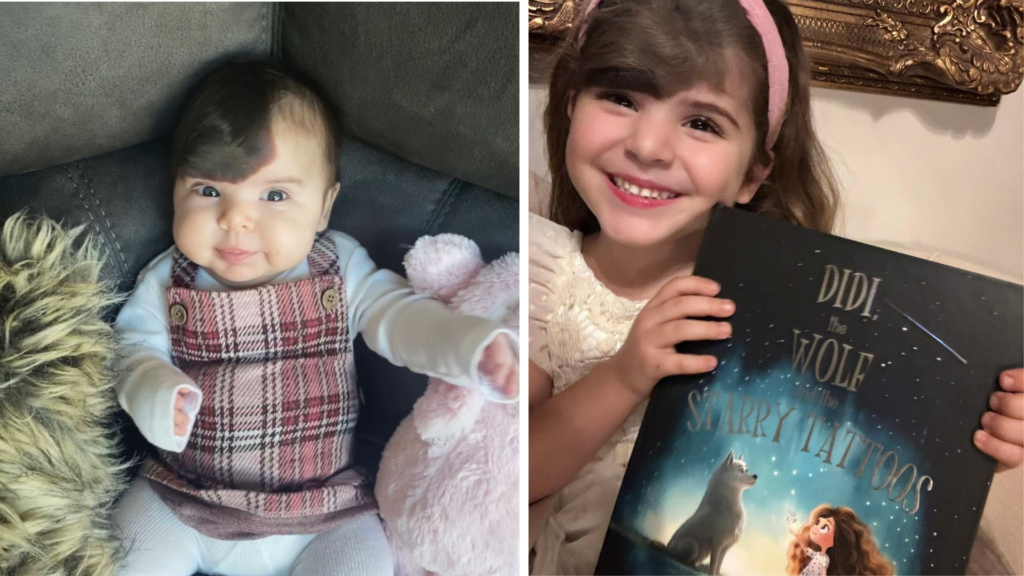
When Alicia was a baby, Dahlia saw little representation of CMN in books. She started to write down her experiences and form ideas for her first children’s book.
The support from the visible difference community has been amazing. There is something deeply uplifting about being surrounded by people who understand why visibility matters. When children and adults with differences are seen publicly and positively, it gives other families hope.
Children’s publishing can be challenging when it comes to so-called “niche” topics like visible differences. Yet one in five people has a visible difference. Despite that, books on these themes often occupy limited shelf space and can disappear if they don’t sell quickly.
When Alicia was born, I couldn’t find a single children’s book featuring CMN. That absence became part of my motivation to write.
Representation in books is powerful. Seeing differences normalised on the page helps children understand that everyone is unique. And that’s something to celebrate. It’s one thing to teach my daughter confidence in herself; it’s another to create environments where she doesn’t have to constantly explain who she is.
Ultimately, this book is about making room: In classrooms, in libraries and in conversations. For every child to feel seen, valued and understood. Because when we build inclusive spaces together, everyone thrives.