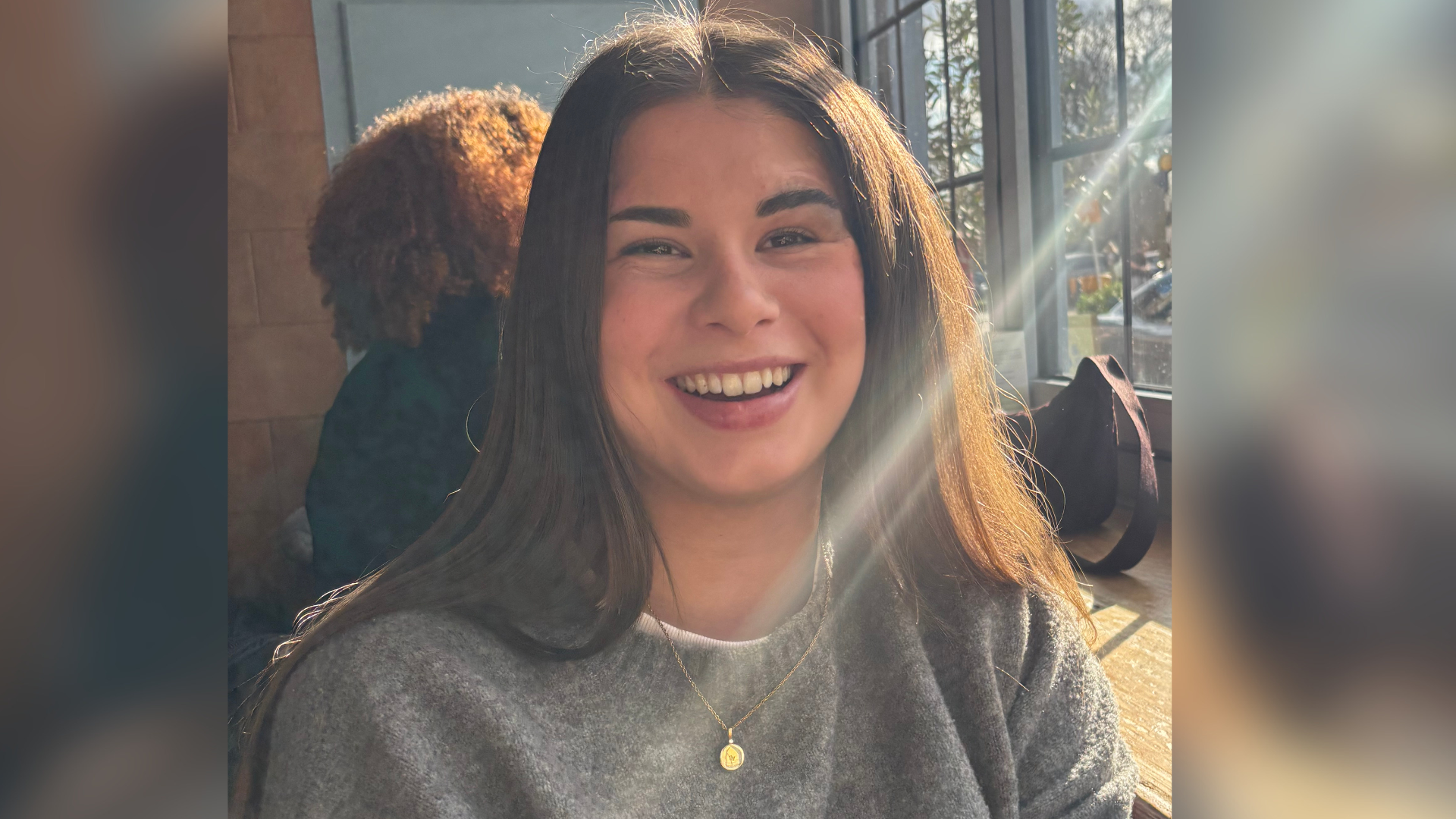
My name is Sophie and I’m a 25-year-old rugby player from Somerset. I play for Saracens Women in Premiership Women’s Rugby, which is the highest level of women’s rugby union in England.
I’ve grown up with Congenital Melanocytic Naevus (CMN), a rare mosaic condition caused by a genetic mutation. When I was born, very little was known about CMN and there was limited research into the condition.
From around six weeks old until I was 15, I received treatment at Frenchay Hospital. My care mainly involved surgery, and I would usually return to hospital each year for another operation. Each time meant going through the whole process of pre-operation appointments, the surgery itself and then follow-up care afterwards.
The more you try to hide it, the more power it has over you.
When I was eight years old, I had a particularly major procedure where surgeons took skin from my stomach and grafted it onto my face. At the time, this approach was still very new and I was among the first patients with CMN to have that type of surgery. Because doctors were still learning about the best aftercare, the graft didn’t heal exactly as expected, which is why the skin tone is slightly different today.
Thankfully, treatments and understanding of CMN have improved significantly since then, and care for people with the condition is now far more advanced.
Growing up, I didn’t feel different and my family played a huge role in shaping my confidence and my sense of what was “normal”. I have three older brothers who teased me just enough to toughen me up, but they also made sure I never felt frightened or alone.
The regular hospital visits never made me feel like my life was unusual compared to other children. To my family, it was simply “just another” operation, appointment or procedure, and that was that. My brothers would sit with me, make me laugh and reassure me whenever I felt nervous – sneaking in treats when I needed them. My mum was also a constant support, being there at every hospital visit, driving me, caring for me, making me laugh, sleeping by my side in hospital and always playing air hockey with me even though I’d win every time!
I was fortunate to grow up in a small town where everyone knew me. My friends often say that they don’t even notice my birthmark. Even if that’s true, though, you still feel it internally sometimes.
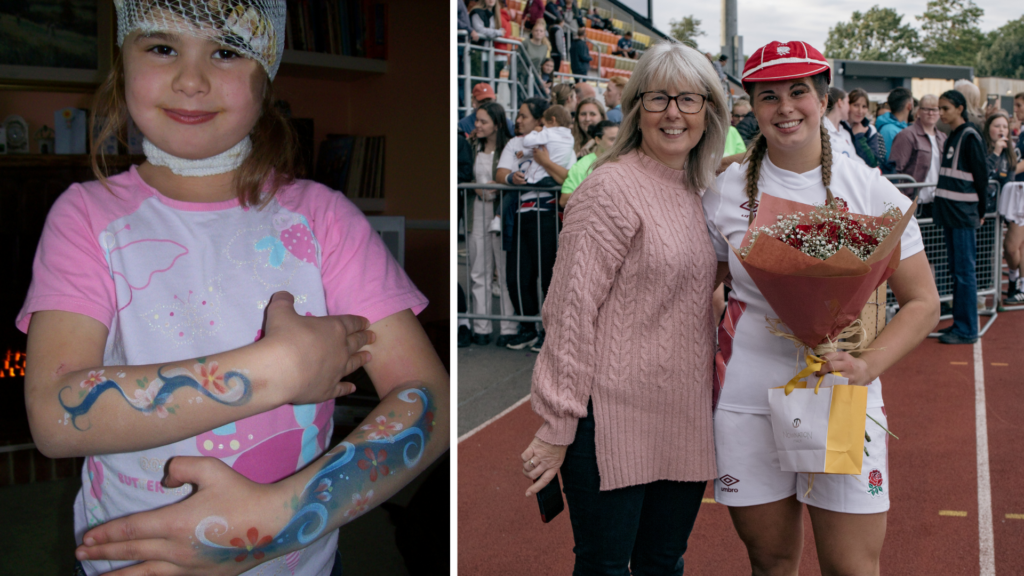
Growing up, Sophie didn’t feel different and her family and sport helped shape her confidence
The first time I started to see my difference in a new way was as a teenager. From around Year 8 through to college, I worried that when people looked at me, the first thing they noticed was my visible difference, and that they might see it as ugly or feel less attracted to me because of it.
Luckily, in recent years, I’ve really grown into my confidence. Rugby has been a safe haven for me, and my girlfriend has been incredible in reinforcing my confidence. She knew nothing about my story before we met, had no prior warning, and it didn’t change anything for her. It shouldn’t matter, but when you’ve grown up with that insecurity sitting quietly in the back of your mind, it means a lot.
There are still moments when I find myself thinking: ‘Why me? Why do I have to look different?’ But when I reflect on it now, I can see how much my visible difference has shaped who I am. It’s helped make me a more resilient and determined person.
Last season, a young girl with CMN asked for my signature. We didn’t speak about it directly, but there was a mutual understanding between us. That moment made me quite emotional. You don’t meet many people with it, and to know she could see someone like her playing professional rugby meant everything. I’ve never really thought of myself as a role model (and still don’t, really), but the idea that I might represent a community of people with visible differences in sport is inspiring. It’s given me more motivation to share my story and speak about it publicly.
If I could say one thing to a younger person with CMN, it would be to embrace it. The more you try to hide it, the more power it has over you. Yes, people will stare. Yes, some will make comments. But most of the time it doesn’t come from a bad place, just curiosity. These moments can be an opportunity to educate. Use it as a superpower. People remember you. If you carry yourself with confidence, it stops being a big deal because you’ve shown that it’s not a big deal to you.
Luckily, I never saw my appearance as a barrier to playing sport, largely because I had so much support from my family, friends and coaches. But I hope that by playing sport at this level, I can inspire others to chase their dreams regardless of the barriers they may face. And one thing I’ve learned along the way is that you usually care far more about your appearance than anyone else does. It should never stop you from doing something you love.
Quotes in this article are adapted from material originally published by Saracens Rugby Club.