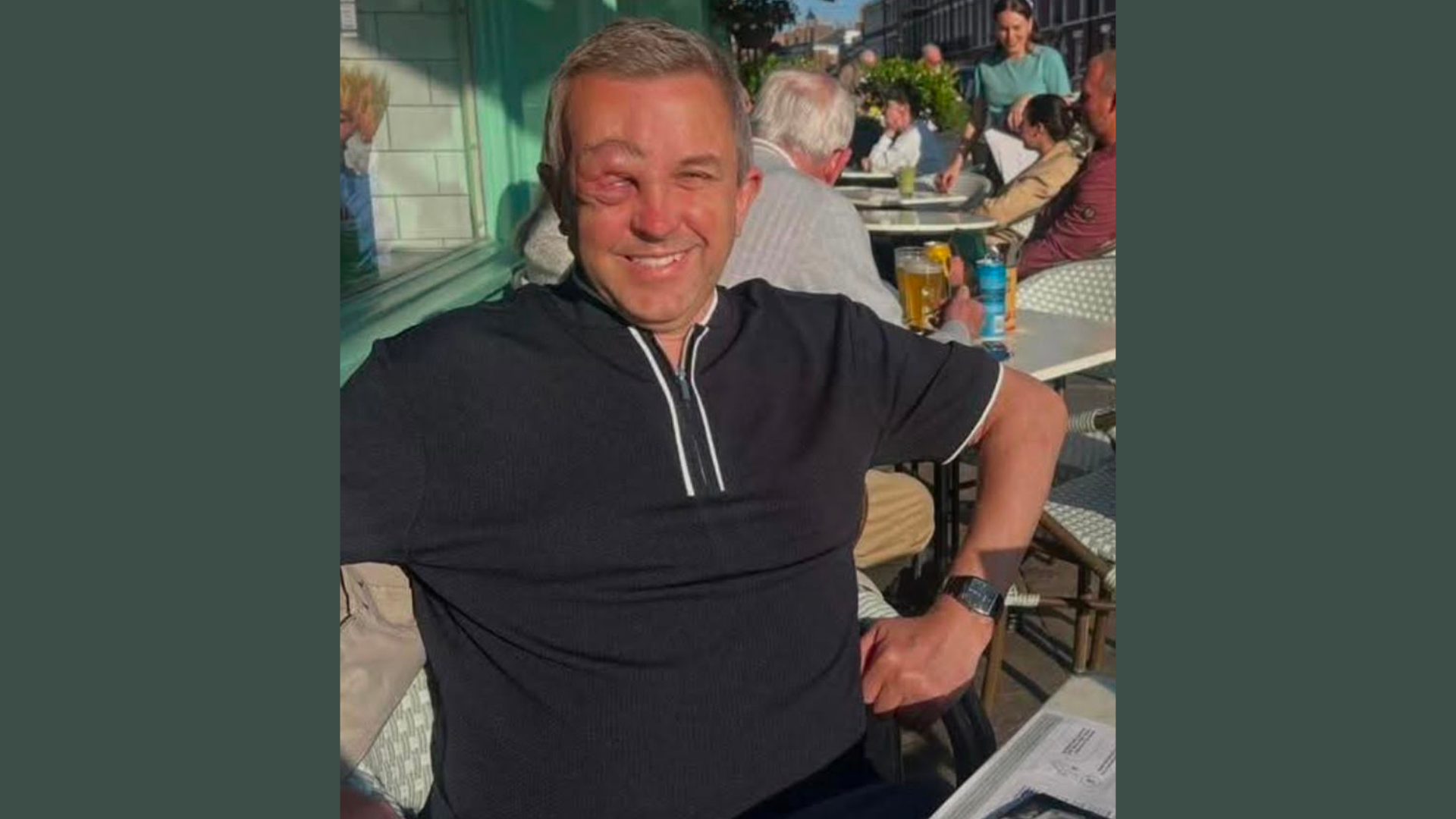
I was born with neurofibromatosis type 1 (NF1), a genetic condition that causes visible differences, so I’ve never known life any differently.
I grew up in Old Swan, Liverpool, in a close-knit community where everyone knew everyone. We all played out in the street together, went to the same schools and later saw the same familiar faces as adults. I’ve still got that sense of community around me today.
Like a lot of people with visible differences, I experienced name-calling growing up. But I also remember the children who stood up for me. If someone shouted abuse, the kids from across the road would be straight over to defend me. Those moments stayed with me because they reminded me that kindness can outweigh cruelty.
Moving to secondary school was probably the toughest time. Suddenly there were hundreds of children in my year group. Half of them knew me already, but half didn’t.
There was staring, there were comments, and there were days when I had to tell myself to take a deep breath and carry on. Some days I could brush it off. Other days it really got me down. I think that’s something many people with visible differences understand. You have good days and bad days.
“It only takes one comment or one look from someone to knock your confidence.”
Living with NF1 has influenced many parts of my working life. I’ve worked in museums for much of my career, and I love meeting people. But working in public-facing roles can also be challenging.
When I worked in a large museum, around 5,000 people visited every day. There were lots of school groups, and although children are naturally curious, constantly feeling looked at became exhausting. Eventually, I asked to move to a quieter gallery because it was affecting my mental wellbeing.
There are days when I feel confident chatting to visitors, but there are other days when my self-esteem is low and I just want to get through my shift with as little interaction as possible.
It can also be difficult navigating a child’s curiosity, although children usually ask from a place of innocence, and it’s the parents who seem more uncomfortable.
If a child asks what happened to me, I usually tell them I had an accident when I was little. They’ll ask if I went to hospital, I’ll say yes, and that’s enough. They’ve had their question answered and we both move on.
When it comes to work, I’ve had countless experiences where I’ve walked away convinced my visible difference has cost me opportunities.
One that has always stayed with me was when I applied for bar work during the Grand National, around 20 years ago now. The manager interviewed me, talked through my experience and told me to come back later that day because I had the job.
When I returned, the staff looked uncomfortable. They rang upstairs, and moments later, I was told that the job had gone.
I felt pretty humiliated, and my friend wanted to challenge them, but I told him to leave it. You can’t prove why someone changes their mind, but after experiences like that, you begin to recognise a pattern.
“You’re still you. You might look different, but you’re still the same person inside.”
As someone living with NF1, I’ve had countless surgeries over the years. Most recently, I’ve had surgery on my face, and while I’m recovering, I can’t wear my prosthetic eye.
Even though I’ve lived with a visible difference all my life, adapting to another change in my appearance has affected my confidence. There are days when I don’t want to leave the house.
There was even a time when I didn’t like having mirrors around the house because seeing my reflection drained my confidence. My daughter has been one of the biggest reasons I’ve been able to do that. She always tells me, “You’re only looking at your eye. We see the whole picture. I just see my dad.”
That means more than she’ll ever know.
People often assume that because you’ve lived with a visible difference for a long time, you’re somehow immune to the reactions of others. You become used to it, but you never stop feeling it.
It only takes one comment or one look from someone to knock your confidence. You might be having a brilliant day, and then suddenly everything changes.
At the same time, I’ve learned that confidence isn’t about never feeling affected. It’s about finding ways to keep going despite those moments.
I think about people who acquire a visible difference later in life, perhaps after cancer or an accident, and I can only imagine how difficult that adjustment must be.
One of my friends had surgery for mouth cancer, and the biggest thing I wanted him to know was this:
You’re still you.
You might look different, but you’re still the same person inside.
That’s something I remind myself of too. No matter what anyone else sees when they look at me, I know that I’m still me. And that’s the most important thing.